

What's Happening?
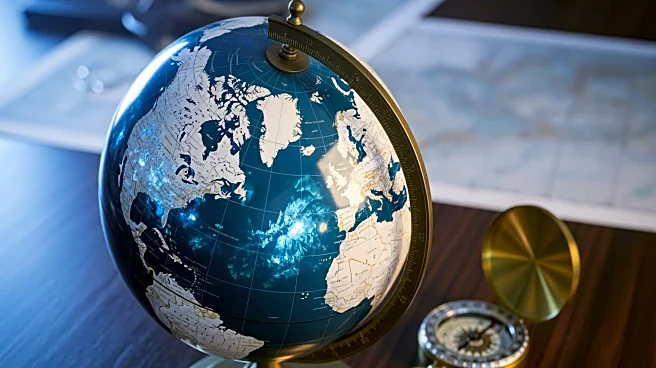
President Donald Trump has appointed Louisiana Governor Jeff Landry as the U.S. special envoy to Greenland, a move that has reignited discussions about the U.S.'s interest in the mineral-rich Arctic island. Greenland, a self-governing territory of Denmark,
is strategically significant due to its location and vast mineral resources, including critical raw materials like graphite, copper, and lithium. These resources are essential for modern technologies and the shift to sustainable energy. The appointment of a special envoy specifically for Greenland highlights the U.S.'s focus on the island's potential contributions to national security and economic interests. Historically, the U.S. has shown interest in Greenland, with past proposals to purchase the island. However, Danish and Greenlandic leaders have consistently rejected the idea, emphasizing Greenland's sovereignty.
Why It's Important?
The appointment of a special envoy to Greenland underscores the U.S.'s strategic interest in the Arctic region, particularly in light of global competition for critical minerals. As China holds significant control over these resources, the U.S. is seeking to diversify its supply chains and secure access to essential materials for technology and defense. Greenland's location also makes it a key site for missile defense systems, further enhancing its strategic value. The move could impact U.S.-Danish relations, as Denmark has repeatedly asserted Greenland's autonomy. The U.S.'s actions may also influence international policies regarding Arctic sovereignty and resource management, potentially leading to geopolitical tensions.
What's Next?
The appointment of Jeff Landry as special envoy may lead to increased diplomatic engagements between the U.S., Denmark, and Greenland. The U.S. may pursue negotiations to enhance cooperation on security and resource development, while respecting Greenland's autonomy. Danish and Greenlandic leaders are likely to continue advocating for their territorial integrity, potentially seeking support from international allies. The situation may also prompt discussions within the U.S. government about Arctic policy and the role of special envoys in advancing national interests.