







What's Happening?
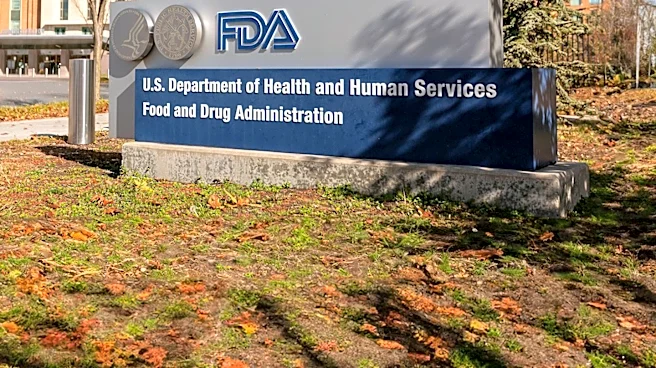
The Department of Health and Human Services (HHS) has released a roadmap aimed at accelerating the use of artificial intelligence (AI) in clinical care. However, this roadmap does not clarify whether the Food and Drug Administration (FDA) will oversee
Utah's pilot programs, which allow AI systems to renew and, in one instance, write new prescriptions. The FDA typically requires premarket authorization for software that diagnoses or treats patients, a category that Utah's AI tools appear to fall under. Despite this, FDA officials have not publicly stated whether they are regulating these specific AI tools. Utah's Office of AI Policy, established in 2024, grants temporary regulatory relief to companies testing AI tools in exchange for monthly reports, with the power to modify or terminate pilots. These pilots include Doctronic for chronic medication renewals, Legion Health for psychiatric medication refills, August AI for chronic medication renewals, and Nolla Health, which allows AI to write new acne prescriptions from a physician-approved list.
Why It's Important?
The lack of clear FDA oversight for AI systems directly involved in prescribing medications raises significant patient safety and accountability concerns. While Utah's pilots have not reported serious safety incidents, critics, including Utah's Medical Licensing Board, have questioned the safety and regulatory framework. The roadmap's silence on FDA involvement creates a regulatory gray area, leaving patients uncertain about which agency is responsible for vetting these AI systems before and after their deployment. This situation highlights a growing challenge in regulating rapidly evolving AI technologies in healthcare, where state-level innovation outpaces federal guidance. The potential for these pilots to expand to other states like Arizona, Missouri, Texas, and Wyoming further amplifies the need for a clear, unified federal regulatory approach to ensure consistent safety standards across the nation.
What's Next?
The HHS roadmap proposes partnering with state-level regulatory sandboxes, developing risk-based rules, expanding outcomes-based payments, improving health data sharing, and post-market monitoring of AI tools. It also aims to clarify liability when AI harms a patient. However, without explicit FDA guidance on oversight for prescription-writing AI, the regulatory landscape remains fragmented. Utah's Office of AI Policy is coordinating with federal partners to align state efforts with federal frameworks, but a definitive statement from the FDA is still pending. Patients using these AI services are advised to inquire about clinician review, access to human contact, and reporting mechanisms for problems. The ongoing dialogue between state and federal entities will be crucial in shaping future regulations for clinical AI, particularly concerning patient safety and accountability.
Beyond the Headlines
This situation underscores a broader tension between technological innovation and regulatory adaptation. While AI offers potential benefits in healthcare efficiency and access, the absence of clear federal oversight in critical areas like prescription generation could erode public trust and create a patchwork of safety standards across states. The ethical implications of AI making medical decisions, even under physician supervision, are also significant, raising questions about the nature of medical practice and professional responsibility. The development of a robust regulatory framework for clinical AI will require a delicate balance between fostering innovation and ensuring patient safety, potentially necessitating new legislative actions or significant updates to existing FDA guidelines to address the unique challenges posed by AI in medicine.