





What's Happening?
The Pacific Northwest is experiencing a series of intense storms, driven by atmospheric rivers, bringing damaging winds, dangerous surf, and significant snowfall to higher elevations, particularly in Washington and Oregon. These conditions are also affecting
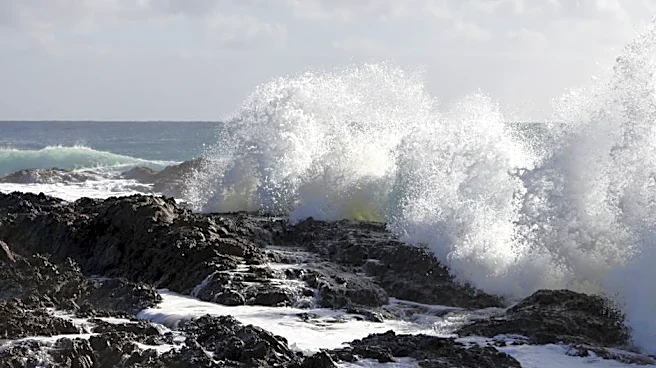
areas as far south as Northern California. Winds are projected to reach between 60 and 80 mph along the coast and up to 40 mph along the Interstate 5 corridor. High Wind Warnings are in effect for the south-central Oregon coast. Coastal areas of Washington, Oregon, and California are facing massive ocean swells, with breakers potentially reaching 30-35 feet, leading to destructive surf and life-threatening sneaker waves. Widespread rain is expected to continue, with some coastal areas likely to receive over 6 inches, contributing to already saturated ground and flash flooding reports in areas like San Francisco. The Sierra Nevada and Intermountain West are bracing for heavy snow, with a Winter Storm Warning issued for parts of Yosemite National Park and the Eastern Sierra mountains, where snow is forecast between 5,000 and 7,000 feet elevation.
Why It's Important?
These intense storms pose significant risks to infrastructure, public safety, and economic activities across the Pacific Northwest and parts of California. Damaging winds can lead to power outages, disrupt transportation, and cause structural damage. The dangerous surf conditions and sneaker waves present a severe threat to coastal communities and marine activities, potentially leading to drownings and property damage along the shoreline. Heavy rainfall increases the risk of flash flooding, mudslides, and erosion, impacting roads, homes, and agricultural lands. For the shipping and fishing industries, these conditions can halt operations, leading to economic losses. The substantial snowfall in mountainous regions, while beneficial for water resources, can also close roads, isolate communities, and create hazardous travel conditions, affecting tourism and local commerce. The cumulative effect of these storms could strain emergency services and require significant recovery efforts.
What's Next?
The storms are expected to persist in the Pacific Northwest through mid-week. The most significant threats, including damaging winds, intense surf, and snow at higher elevations, will continue. Coastal regions from Washington to Southern California are under High Surf Warnings and Advisories, with warnings against beach access due to rip currents and sneaker waves. San Francisco is also under a Coastal Flood Advisory. Beach erosion is anticipated to threaten over 500 miles of coastline. In the Sierra Nevada and Intermountain West, snow will remain a primary concern, with a large ridge of upper-level high pressure acting as a barrier, causing systems to split and deliver heavy rain to Northern and Central California and snow to the Sierra Nevada. Residents and authorities will need to remain vigilant, follow weather advisories, and prepare for ongoing impacts and potential recovery efforts.