








What's Happening?
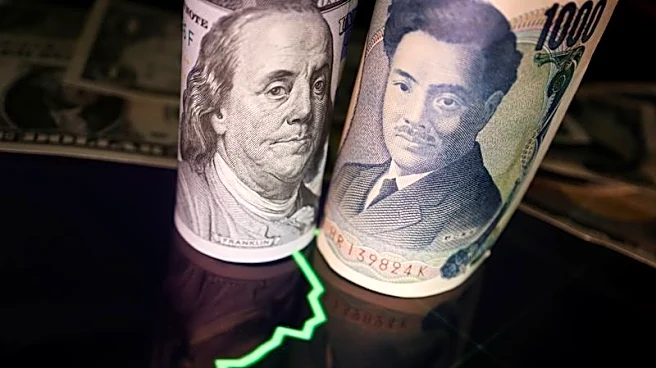
The United States has joined Japan in a coordinated intervention to support the yen, marking the first such joint operation since 1998. This move comes as the yen has reached its weakest level against the dollar in nearly four decades. Analysts suggest
that the U.S. participation is driven by concerns over the potential impact on U.S. Treasury markets, as Japan is the largest foreign holder of U.S. government debt. The intervention aims to prevent Japan from selling large quantities of Treasuries to finance unilateral actions, which could destabilize the dollar and increase Treasury yields. The U.S. and Japan have emphasized the use of the Federal Reserve's FIMA repo facility to provide dollar liquidity without selling Treasuries outright.
Why It's Important?
The intervention underscores the interconnectedness of global financial markets and the potential ripple effects of currency fluctuations. By participating, the U.S. aims to protect its Treasury markets from volatility that could arise from Japan's fiscal policies. This move also reflects broader economic and geopolitical priorities, as a persistently weak yen could affect global bond markets and trade dynamics. The intervention highlights the strategic importance of maintaining stable currency relationships and the role of coordinated international efforts in addressing financial challenges.
What's Next?
The U.S. and Japan have signaled their willingness to intervene again if necessary, which could deter speculative bets against the yen. However, analysts warn that without addressing the underlying structural issues causing yen weakness, such interventions may only provide temporary relief. The Bank of Japan may need to consider adjusting its monetary policy to achieve a more sustainable strengthening of the yen. The situation will likely be closely monitored by global financial markets, as further actions could have significant implications for international trade and economic stability.