
What's Happening?
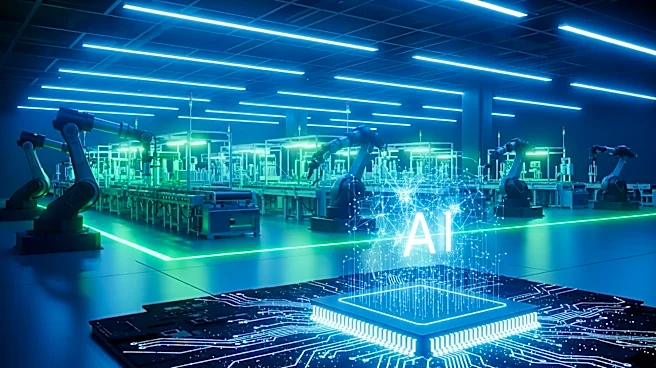
The rapid advancement of artificial intelligence has led to two major races: one among leading tech companies and another between superpowers, notably the United States and China. These races are largely
unregulated, with financial and physical constraints being the only limits. The U.S. government has deferred regulatory responsibilities to Congress, and there is no AI arms control agreement in place between the U.S. and China. The paper from the Hoover Institution highlights concerns over potential adverse consequences, such as unemployment, and calls for a new détente based on AI arms control to mitigate risks associated with these races.
Why It's Important?
The unregulated nature of AI development poses significant risks to global security and economic stability. The competition between companies and nations could lead to unintended consequences, including technological monopolies and geopolitical tensions. The lack of regulation may also result in ethical and safety concerns, as AI systems become more integrated into critical infrastructure and decision-making processes. Establishing control measures and international agreements could help prevent negative outcomes and ensure that AI advancements benefit society as a whole.
What's Next?
Efforts to establish AI arms control agreements and regulatory frameworks are likely to be a focus for policymakers and international organizations. The U.S. and China may engage in diplomatic discussions to address the competitive dynamics and explore collaborative approaches to AI governance. Additionally, public and private sectors might invest in research to understand the societal impacts of AI and develop strategies to manage its integration responsibly.