
What's Happening?
Ukrainian forces have withdrawn from the eastern town of Siversk as Russian troops intensify their offensive along the front line. This strategic withdrawal comes amid a large-scale Russian attack on Ukraine's
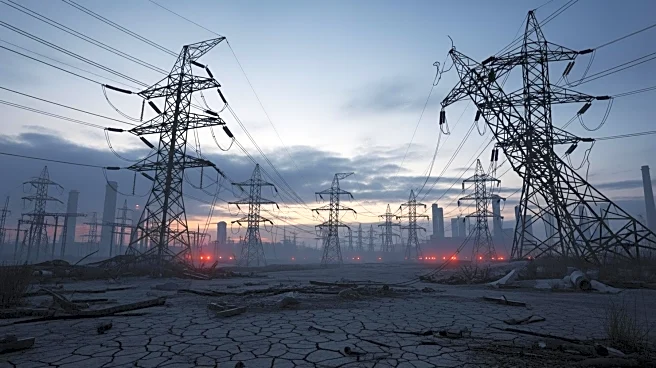
energy infrastructure, involving over 650 drones and dozens of missiles. The attacks have resulted in significant power outages across several Ukrainian regions, exacerbating the challenges faced by civilians during the harsh winter. The Ukrainian military reported that the withdrawal was necessary to preserve the lives of its soldiers, despite inflicting heavy losses on Russian forces. The situation remains tense as Russia continues to target energy and military sites.
Why It's Important?
The withdrawal from Siversk marks a significant development in the ongoing conflict, as it opens the way for Russian forces to advance towards more strategic cities. The attacks on Ukraine's energy infrastructure highlight the vulnerability of critical systems during wartime, with potential implications for civilian safety and economic stability. The power outages caused by these attacks could lead to humanitarian crises, particularly during the winter months. The conflict also underscores the broader geopolitical tensions between Russia and Western nations, with potential impacts on international relations and security policies.
What's Next?
As the conflict continues, there is likely to be increased international pressure on Russia to cease its aggressive actions. Diplomatic efforts, including peace talks involving U.S. officials, may intensify in an attempt to reach a resolution. Ukraine will need to focus on strengthening its defenses and securing its energy infrastructure to mitigate further attacks. The international community may also consider additional sanctions or support measures to assist Ukraine and deter further aggression. The situation remains fluid, with potential for further escalations or breakthroughs in negotiations.