
What's Happening?
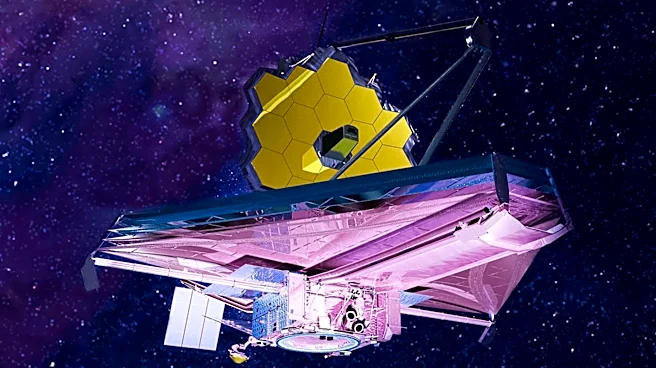
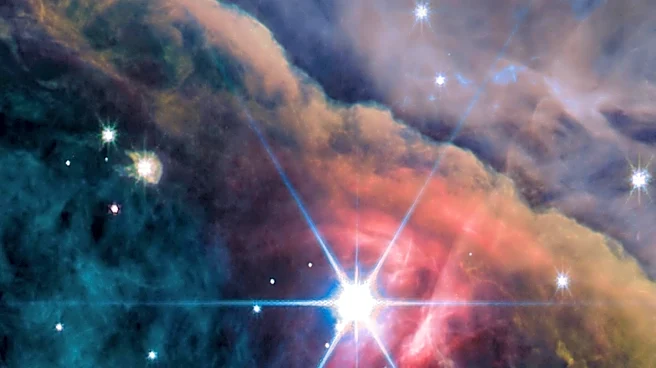
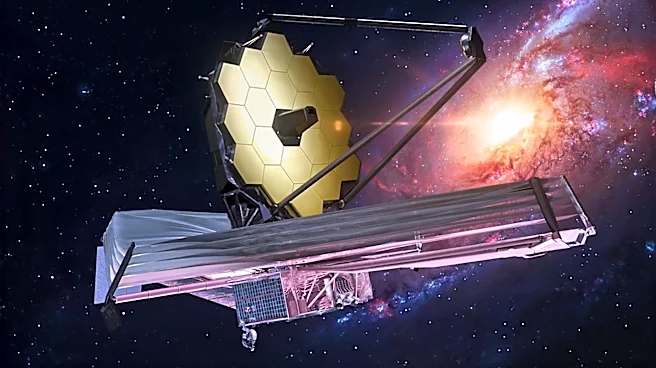
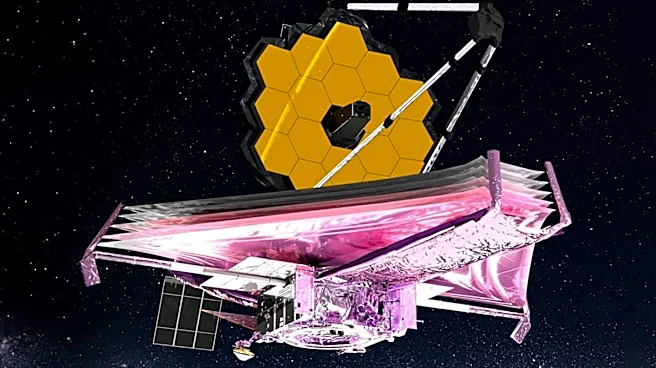
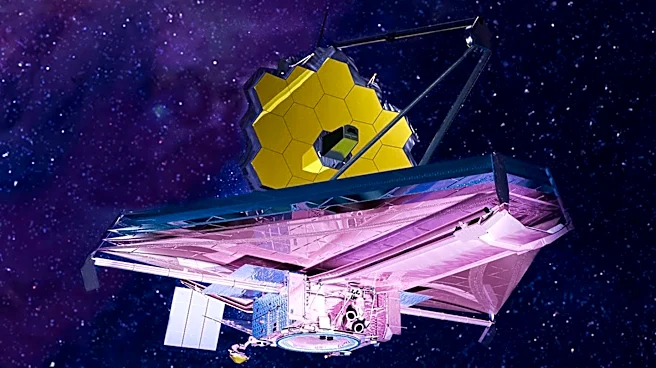
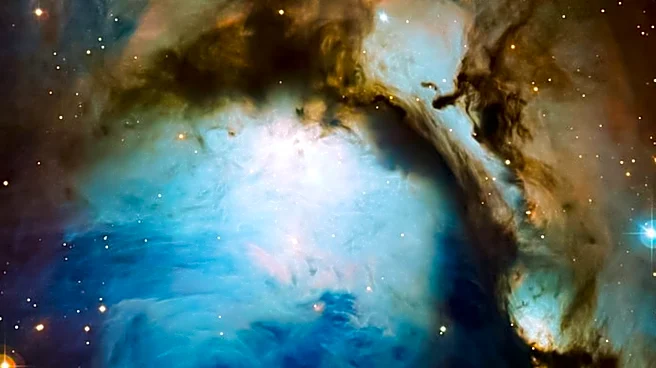
The James Webb Space Telescope has made a groundbreaking discovery of dust and water near the supermassive black hole at the center of the Milky Way. The star IRS 3, located close to Sagittarius A*, is shedding material into space, creating an envelope
of oxygen-rich dust and water. This discovery, led by an international team of astronomers, reveals that stars can continue to contribute material to their surroundings even in extreme environments dominated by intense radiation.
Why It's Important?
This finding challenges previous assumptions about the hostile nature of environments near supermassive black holes. The presence of water and dust suggests that stars can still play a role in cosmic dust production, which is crucial for the formation of new stars and planets. This discovery could reshape our understanding of galactic centers and the processes that occur in these extreme regions, potentially impacting theories about star formation and the evolution of galaxies.
What's Next?
Further observations and studies are likely to follow, using the Webb Telescope's advanced capabilities to explore other stars and regions near the Milky Way's center. These studies could provide more insights into the life cycles of stars in extreme environments and the role they play in galactic evolution. The findings may also prompt new theoretical models and simulations to better understand the dynamics of galactic centers.