





What's Happening?
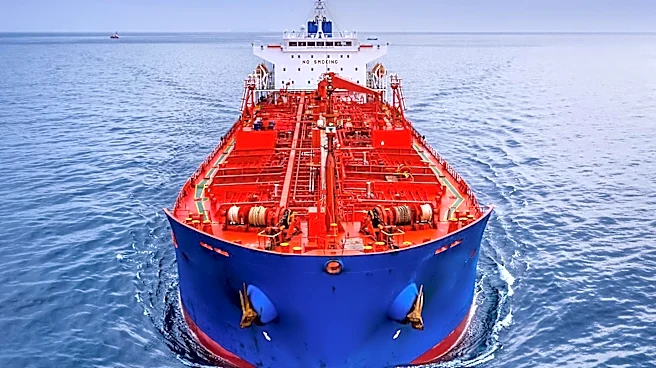
The United States and its allies are increasingly resorting to maritime interdiction as a means of enforcing economic sanctions. This shift comes as targeted countries develop sophisticated networks to evade sanctions, challenging the traditional reliance
on financial systems for enforcement. Since late 2024, naval forces in Europe and NATO partners have detained or inspected numerous vessels suspected of carrying sanctioned cargo, particularly focusing on shadow fleet tankers transporting Russian oil. These operations have expanded to include Iranian and Venezuelan vessels, with European and Indian authorities joining the effort. The legal framework for such actions is complex, as modern sanctions enforcement often exploits legal ambiguities, such as frequent flag changes and unclear ownership structures, to justify boarding ships.
Why It's Important?
The move towards maritime interdiction highlights a significant shift in how economic sanctions are enforced, reflecting the limitations of financial systems in curbing sanctions evasion. This development has implications for global trade, as it introduces a more direct and potentially confrontational method of enforcement. The lack of a unified international legal framework for such actions raises concerns about consistency and the potential for conflict. As countries increasingly rely on physical enforcement, the risk of miscalculation and escalation at sea grows, potentially affecting global shipping lanes and international relations.
What's Next?
The trend towards maritime interdiction is likely to continue as countries seek to close enforcement gaps left by financial systems. However, the absence of a universally accepted system for sanctions enforcement at sea could lead to fragmented and inconsistent outcomes. Nations may continue to act in parallel rather than through a unified system, increasing the potential for legal disputes and diplomatic tensions. The expansion of maritime interdiction could also set precedents that blur the lines between law enforcement and economic coercion, prompting other countries to adopt similar methods in different contexts.