



What's Happening?
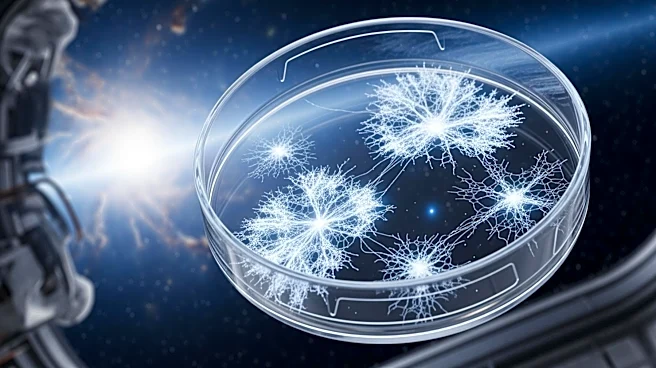
NASA's ODYSSEY project is examining how bacteria behave in microgravity environments, with experiments conducted both aboard the International Space Station and in Earth-based microgravity simulators. The research focuses on two bacterial species to understand
their growth, biofilm formation, and genetic material exchange in space. This study aims to improve the success of future space missions and develop strategies to control infections in hospitals on Earth. The project is led by Camilla Urbaniak from NASA's Jet Propulsion Laboratory.
Why It's Important?
The findings from NASA's ODYSSEY project could have significant implications for both space exploration and healthcare on Earth. By understanding bacterial behavior in microgravity, NASA can develop better protocols to prevent biofilm damage to spacecraft systems, which is crucial for long-duration missions. Additionally, insights gained could inform new methods to control biofilm formation in healthcare settings, potentially reducing hospital-acquired infections. The research also contributes to understanding how bacteria develop antibiotic resistance, a major public health concern.
What's Next?
Future steps include analyzing the data collected from the experiments to validate the effectiveness of ground-based microgravity simulators. This validation could expand opportunities for microgravity research on Earth, making it more accessible and cost-effective. NASA may also develop new protocols for monitoring and controlling bacterial growth on spacecraft, enhancing the safety and success of future missions.