










What's Happening?
European Central Bank (ECB) President Christine Lagarde has announced a shift in the ECB's approach to monetary policy, emphasizing a return to more traditional methods. Speaking at a conference in Sintra, Portugal, Lagarde stated that the ECB no longer
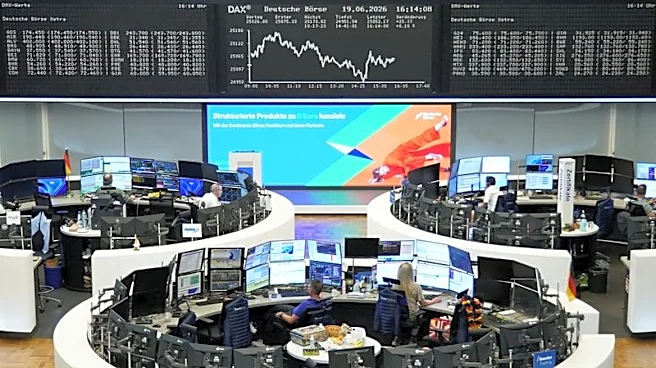
requires unconventional instruments, complex forward guidance, or forceful actions. This announcement comes as the ECB recently decided to raise interest rates, a move Lagarde described as justified under various scenarios. Bundesbank President Joachim Nagel also highlighted ongoing economic challenges, warning that inflation could remain significantly above target despite easing geopolitical tensions. Preliminary data from major eurozone economies indicated that inflation cooled more than expected in June, potentially reducing immediate pressure on the ECB to further increase interest rates.
Why It's Important?
The shift in the ECB's monetary policy approach is significant as it reflects a broader trend towards normalization in the wake of years of unconventional measures taken to combat economic crises. This move could impact financial markets and economic stakeholders across Europe and beyond, as the ECB's policies influence global economic conditions. The decision to raise interest rates, despite cooling inflation, suggests a cautious approach to managing economic recovery and inflationary pressures. This could affect borrowing costs, investment decisions, and consumer spending, with potential ripple effects on the U.S. economy, particularly in terms of trade and financial markets.
What's Next?
The ECB's return to traditional monetary policies may lead to further adjustments in interest rates and other economic measures as the bank navigates ongoing economic challenges. Stakeholders, including businesses and governments, will likely monitor these developments closely, as changes in ECB policy can influence global economic conditions. Additionally, the Federal Reserve's upcoming public comments and decisions will be watched for potential alignment or divergence in monetary policy approaches between the U.S. and Europe.