





What's Happening?
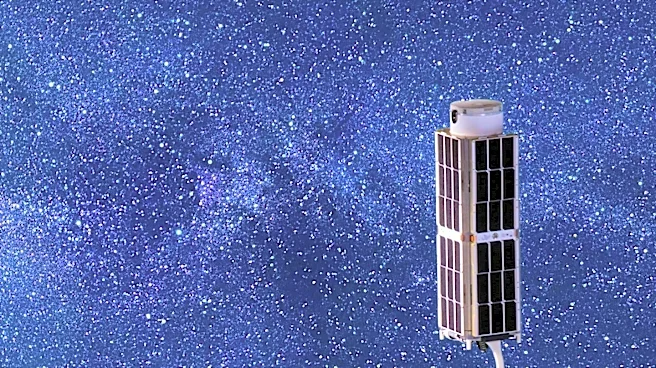
A new analytical guidance model has been developed for CubeSats to achieve precise atmospheric re-entry, addressing the growing issue of space debris. This model, which incorporates Earth's rotation, J2 perturbation (Earth's oblateness effect), and atmospheric drag,
aims to accurately target re-entry longitudes. Numerical simulations were conducted for 4U CubeSats in Low Earth Orbits (LEOs) at initial altitudes of 500 km, 600 km, and 700 km. The model uses a single finite-duration retrograde de-orbit maneuver, integrating a GPS-based navigation system and an Extended Kalman Filter (EKF)-assisted Attitude Determination and Control System (ADCS) for autonomous burn execution. The study found that the Earth-rotation correction is the most significant factor in determining the burn longitude, accounting for over 99% of the correction budget. This is crucial for ensuring that CubeSats can be de-orbited to specific geographical locations, minimizing risks associated with uncontrolled re-entries.
Why It's Important?
The rapid increase in CubeSat deployments has exacerbated the problem of space debris, posing a significant threat to operational satellites and future space activities. International guidelines, such as the U.S. Federal Communications Commission (FCC)'s 5-year post-mission disposal rule, emphasize the need for rapid and controlled de-orbiting. This new guidance model offers a solution by enabling precise targeting of atmospheric entry interfaces, which is a critical capability for mitigating collision risks and ensuring compliance with regulatory requirements. Unlike passive de-orbiting methods that can take hundreds of days and lack control over the re-entry location, this active propulsion-based approach significantly shortens disposal times to less than an hour and provides direct control over the entry longitude. This advancement is vital for maintaining the sustainability of LEO and protecting valuable space assets from cascading collisions.
What's Next?
The proposed Earth-rotation-aware de-orbit guidance strategy will likely undergo further validation and refinement through more extensive simulations and potentially in-orbit demonstrations. The integration of this model with existing CubeSat platforms could lead to its adoption as a standard for end-of-life disposal. Future developments may focus on optimizing propellant efficiency, enhancing the robustness of the guidance, navigation, and control (GNC) architecture against various environmental uncertainties, and exploring its applicability to a wider range of small satellite missions. The success of such targeted re-entry systems could influence future space debris mitigation policies and regulations, encouraging more stringent requirements for controlled de-orbiting across the satellite industry.
Beyond the Headlines
The development of precise de-orbiting technologies like this model has broader implications beyond immediate space debris mitigation. It highlights a growing trend towards greater responsibility and sustainability in space operations. The ability to accurately control where and when a satellite re-enters the atmosphere could open doors for new applications, such as targeted sample return missions or the safe disposal of sensitive materials. Ethically, it underscores the commitment to preserving the space environment for future generations, moving away from a 'launch and forget' mentality. Legally, it supports the enforcement of international treaties and national regulations aimed at preventing the proliferation of orbital debris, potentially setting new benchmarks for satellite design and operational protocols.