


What's Happening?
The University of Utah's NeuroRobotics Lab is collaborating with Meta to explore the use of the Neural Band as an accessibility tool. This device aims to replace traditional assistive technologies like chin joysticks and sip-and-puff controls by decoding
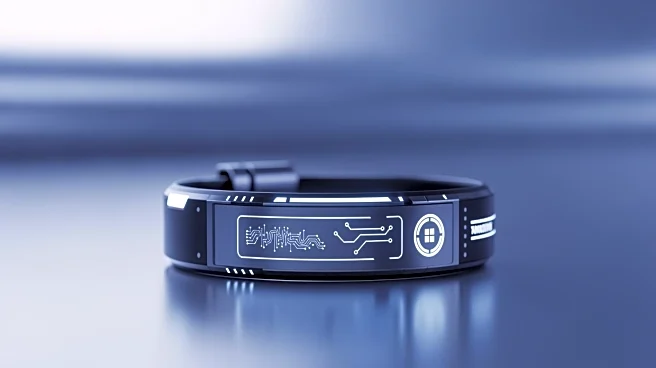
motor intentions from nerve and muscle signals. The Neural Band, a slim and stylish sEMG wristband, is designed to work with Meta's Ray-Ban Display glasses. It captures neural signals at the wrist, which can be detected even when physical movement is limited. The research focuses on participants with spinal cord injuries and motor impairments, assessing the reliability of translating these signals into digital inputs. This initiative is part of a broader effort to develop assistive technologies for individuals with neuromuscular impairments, including those caused by stroke, spinal cord injury, and ALS.
Why It's Important?
The development of the Neural Band has significant implications for accessibility and human-computer interaction. By providing a more intuitive and less cumbersome alternative to existing assistive technologies, it could greatly enhance the quality of life for individuals with mobility impairments. The ability to decode motor intentions from neural signals could lead to more seamless control of computers, smart devices, and other technologies, expanding their functionality and ease of use. This research not only benefits those with disabilities but also has the potential to improve user experiences for the general population by offering more adaptable and robust interaction methods.
What's Next?
The partnership between Meta and the University of Utah is still in the early stages, focusing on understanding the signal quality and long-term viability of the Neural Band. While there is no clear timeline for when the Neural Band might be available as a standalone accessory, the data gathered from this research could influence the development of future assistive and adaptive technologies. As the technology matures, it may lead to broader applications in various fields, potentially transforming how people interact with digital devices.
Beyond the Headlines
The Neural Band's ability to translate subtle neural signals into digital inputs could revolutionize accessibility by providing a silent and private alternative to voice control. This is particularly important in shared and public spaces where privacy is a concern. Additionally, the technology's adaptability to atypical neuromuscular signals could enhance its robustness, making it a valuable tool not only for those with disabilities but also for the general public, potentially leading to new standards in human-computer interaction.