



What's Happening?
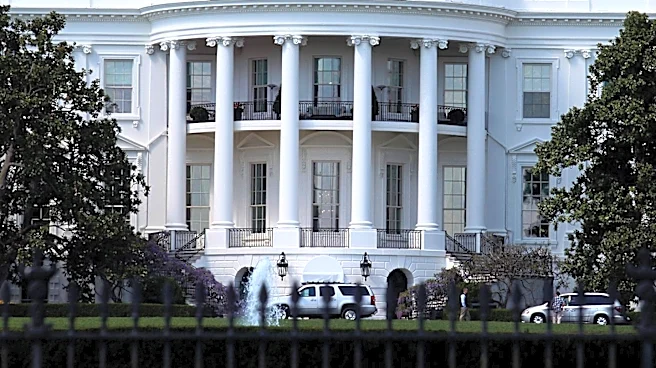
Exhibitions at the Smithsonian's National Museum of American History (NMAH) are under scrutiny from Republican lawmakers and a group of 'Citizen Historians' who allege the museum has abandoned patriotism and promotes an 'anti-white agenda.' A White House
report contends that NMAH has erased the Founding Fathers and seeks to 'divide, dispirit, and discourage our citizens.' Specific criticisms include a caption linking Mickey Mouse's debut to 'blackface minstrelsy,' the inclusion of a photo of RuPaul in a pop culture exhibition, and the framing of 'Many Voices, One Nation' as 'pro-illegal alien activism' for featuring items like accessories abandoned by migrants. Conversely, visitors noted the presence of numerous artifacts related to George Washington and the Revolutionary War, a Border Patrol uniform praised for an agent's service, and protest signs from various political viewpoints, including 'Secure Our Borders' and 'Stop Abortion Now,' which were unmentioned in the critical report.
Why It's Important?
This controversy highlights a significant cultural and political divide in the U.S. regarding the interpretation and presentation of American history and identity. The Smithsonian, as a national institution, plays a crucial role in shaping public understanding of the nation's past and present. Accusations of an 'anti-white agenda' and 'pro-illegal alien activism' reflect broader debates about historical revisionism, national narratives, and the role of museums in addressing complex social issues. The scrutiny from political figures and the White House indicates a politicization of cultural institutions, potentially influencing funding, exhibition content, and public trust. This situation underscores the ongoing struggle to reconcile diverse perspectives on American history, particularly concerning race, immigration, and national identity, and the challenge of presenting a comprehensive narrative that acknowledges both celebratory and critical aspects of the nation's heritage.
What's Next?
The ongoing scrutiny could lead to increased pressure on the Smithsonian and other national museums to adjust their exhibition content or interpretive approaches. This might involve a more explicit effort to balance diverse historical perspectives or to more clearly articulate the rationale behind certain curatorial decisions. Political leaders may continue to use cultural institutions as a battleground for ideological debates, potentially impacting public funding and oversight. The controversy could also prompt a broader public discussion about the purpose of national museums and how they should represent the multifaceted American experience. Curators and historians may face challenges in maintaining academic independence while navigating political pressures, potentially leading to a more cautious approach to sensitive topics or, conversely, a stronger defense of their interpretive authority.
Beyond the Headlines
The debate over the Smithsonian's exhibitions touches upon deeper questions about national memory and collective identity in the U.S. The differing interpretations of historical artifacts and narratives reveal a fundamental disagreement about what constitutes 'American' values and history. The criticism of linking Mickey Mouse to blackface minstrelsy, for instance, highlights the tension between celebrating cultural icons and acknowledging their potentially problematic origins. Similarly, the framing of immigration-related exhibits as 'pro-illegal alien activism' reflects anxieties about demographic change and national borders. This situation underscores how cultural institutions become sites where competing visions of America are contested, influencing how future generations understand their heritage. The controversy also raises ethical considerations about the responsibility of museums to present accurate, inclusive, and critically informed histories, even when those histories challenge dominant narratives or provoke discomfort.