





What's Happening?
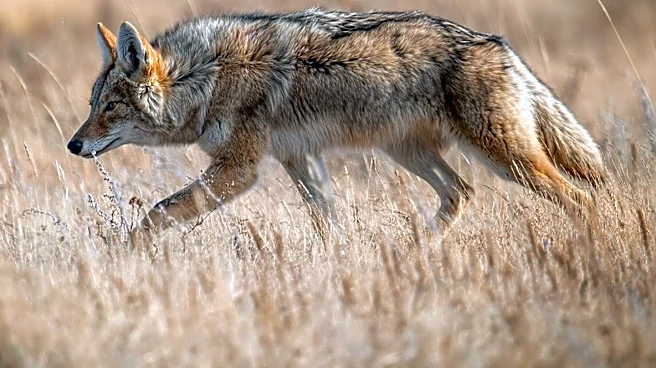
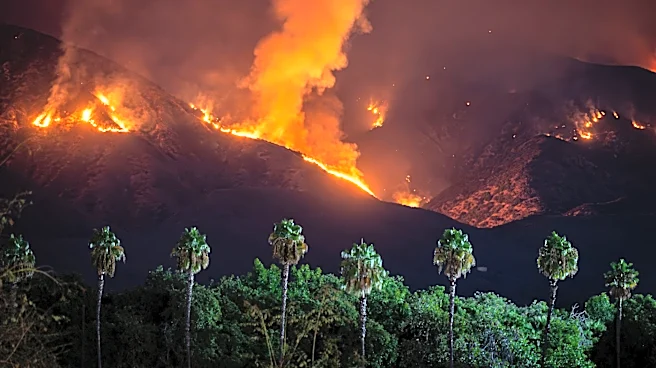
Dan Werb's new book, 'Our Wild Familiars,' explores the phenomenon of wildlife, such as coyotes, increasingly moving into urban areas. This shift is attributed to the transformation of wild spaces into human-modified environments and extreme weather events,
such as the fires in Los Angeles, which have driven animals to seek refuge in cities. Urban areas provide constant sources of freshwater and food waste, making them attractive to wildlife. The book discusses how these animals, known as synanthropes, have adapted to thrive alongside humans, highlighting the complex ecosystems developing in urban settings.
Why It's Important?
The movement of wildlife into urban areas has significant implications for urban planning and public health. As cities become more biodiverse, they must address the challenges of cohabitation with wildlife, such as potential conflicts and disease transmission. This trend also underscores the impact of climate change on animal behavior and habitat. Understanding these dynamics is crucial for developing sustainable urban environments that can accommodate both human and animal populations, potentially leading to innovative solutions like wildlife crossings to facilitate safe animal movement.