

What's Happening?
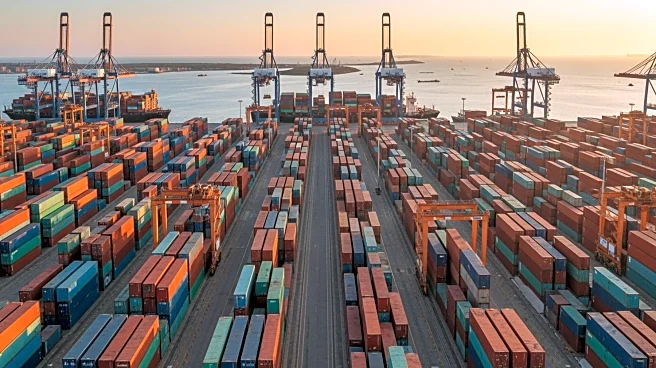
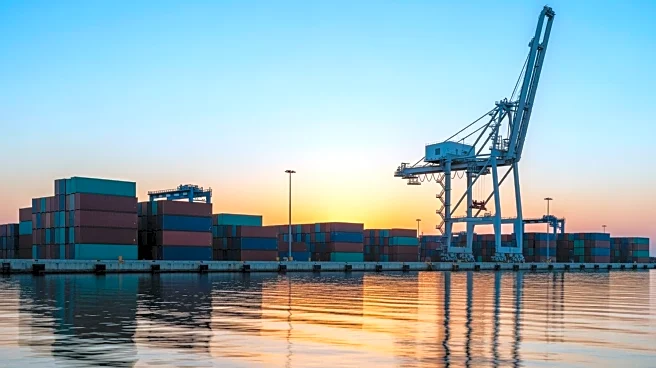
Lamu Port in Kenya has experienced a significant increase in cargo throughput, with a 900% surge attributed to global shipping disruptions. The port, which was commissioned in 2021, has become a strategic alternative for ocean carriers rerouting cargo originally
destined for the Gulf region due to the ongoing Hormuz blockade. This has led to a rise in car carriers choosing Lamu as a discharge point, significantly boosting the port's productivity. Recent vessel calls, including those by Grimaldi Lines' Pure Car Carrier Grande Auckland and Grande Florida Palermo, have contributed to this growth. The Kenya Ports Authority (KPA) has reported that Lamu's status as a transshipment port on the East African coast is being reaffirmed, with expectations of continued increases in cargo volumes.
Why It's Important?
The surge in cargo throughput at Lamu Port highlights the impact of global shipping disruptions on regional ports. As major shipping lines adjust their routes to avoid geopolitical tensions, ports like Lamu gain strategic importance. This development not only boosts the local economy by increasing port activity but also positions Lamu as a key player in the East African maritime industry. The increased activity at Lamu Port could attract further investment and development, enhancing its capacity and infrastructure. This shift may also influence global shipping patterns, as carriers seek reliable alternatives to traditional routes affected by geopolitical issues.
What's Next?
As demand at Lamu Port rises, the Kenya Ports Authority is under pressure to enhance the port's infrastructure and attract investors to the adjacent Lamu Special Economic Zone. The KPA is in the process of transitioning into a Public Limited Liability Company to enable self-financing, which could facilitate further development. Additionally, the selection of private port operators for Lamu's berths is underway, which may lead to increased efficiency and capacity. The continued introduction of regular shipping services to Lamu suggests that the port will play an increasingly important role in regional and global shipping networks.