


What's Happening?
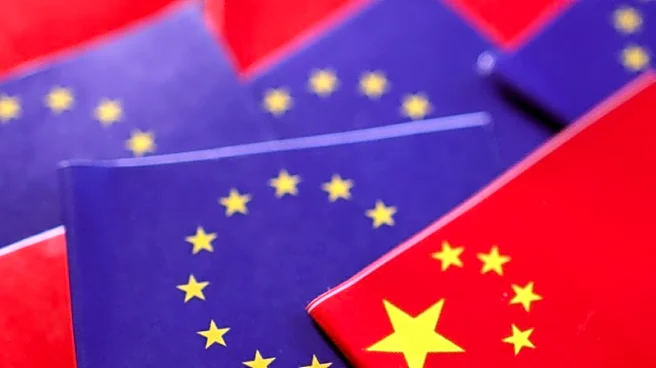
EU leaders are convening at a summit in Belgium to discuss the 'Buy European' initiative, a policy aimed at boosting the continent's economic competitiveness against the US and China. The policy, which involves favoring European companies in strategic
sectors, has sparked debate among EU member states. French President Emmanuel Macron supports the initiative, viewing it as a defensive measure against unfair global competition. However, some northern European countries, including Sweden, express concerns about potential protectionism and regulatory complexity. The European Commission President, Ursula von der Leyen, emphasizes the need for robust economic analysis and adherence to international obligations. The summit will also address deregulation and barriers in the European single market.
Why It's Important?
The 'Buy European' initiative is significant as it reflects the EU's strategic response to global economic pressures, including trade tensions and the rise of state-subsidized competitors like China. The policy could reshape trade dynamics and impact international relations, particularly with the US. It highlights the EU's struggle to balance protectionism with free trade principles. The outcome of these discussions could influence the EU's economic policies and its role in the global market. Stakeholders such as European businesses and international trade partners are closely monitoring the potential regulatory changes and their implications for market access and competition.
What's Next?
The EU is expected to release an Industrial Accelerator Act, setting targets for European content in strategic products. This move could lead to increased investment in European industries, particularly in clean technologies. However, it may also provoke reactions from global trade partners concerned about protectionism. The EU's internal debates on deregulation and market integration will continue, with potential shifts towards a more federated economic structure. The outcomes of these discussions could redefine the EU's economic strategy and its approach to global trade partnerships.