





What's Happening?
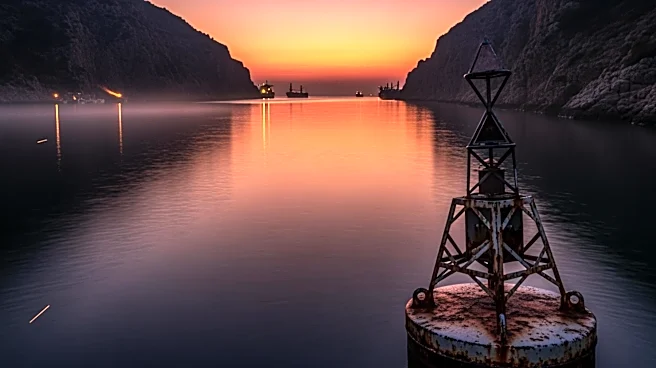
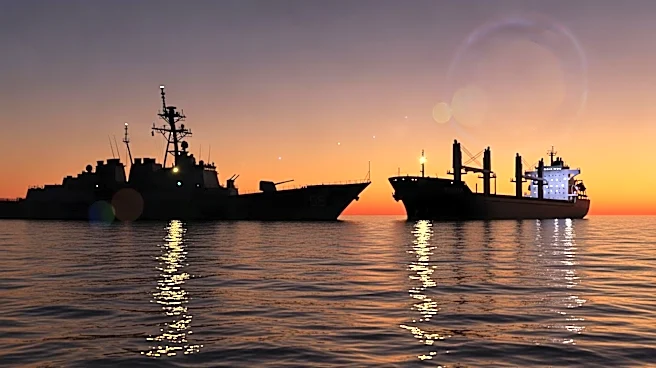
Iran has announced the closure of the Strait of Hormuz, a critical maritime passage, citing the U.S. government's failure to meet its commitments in negotiations. This announcement was accompanied by reports of gunfire on vessels attempting to transit
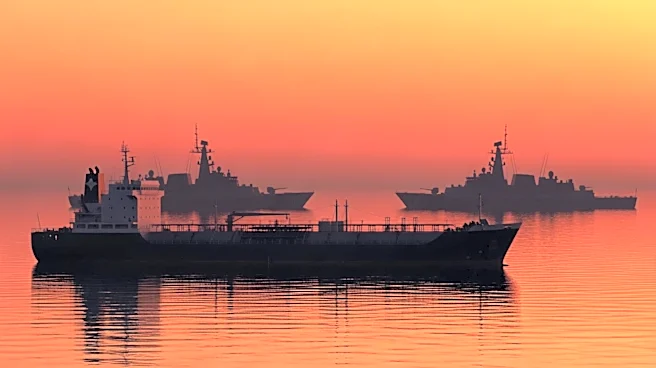
the strait. According to shipping sources, at least two ships were fired upon by Iranian boats, forcing them to turn back. The incidents occurred in waters between Qeshm and Larak islands. The United Kingdom Maritime Trade Operations agency confirmed receiving reports of an incident involving a tanker approached by Islamic Revolutionary Guard Corps gunboats. The tanker and its crew were unharmed. The closure of the strait has left hundreds of ships and approximately 20,000 seafarers stranded, impacting the flow of about 20% of global oil and liquefied natural gas.
Why It's Important?
The closure of the Strait of Hormuz is significant due to its role as a vital conduit for global oil and gas supplies. Any disruption in this region can have far-reaching implications for global energy markets, potentially leading to increased oil prices and economic instability. The situation also underscores the geopolitical tensions between Iran and the U.S., with potential repercussions for international relations and regional security. The stranded vessels and seafarers highlight the immediate human and economic impact, affecting shipping companies and global trade. The incident may prompt responses from international stakeholders, including calls for diplomatic resolutions or increased military presence in the region to ensure safe passage.
What's Next?
The international community is likely to monitor the situation closely, with potential diplomatic efforts to resolve the standoff. Shipping companies may seek alternative routes or delay shipments, impacting global supply chains. The U.S. and its allies might consider diplomatic or military responses to ensure the security of the strait. The situation could escalate if further incidents occur, potentially leading to broader regional conflicts. Stakeholders in the energy sector will be particularly attentive to developments, as prolonged disruptions could affect global energy prices and supply stability.