






What's Happening?
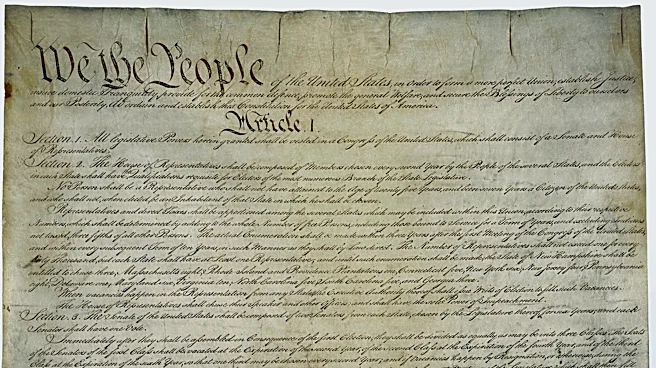
Four former Virginia governors—Douglas Wilder, George Allen, Bob McDonnell, and Ralph Northam—convened at Regent University in Virginia Beach for the Executive Leadership Series titled 'America at 250: Lessons of the Founders.' The event, held at The Founders Inn
and Spa, focused on how the nation's Founding Fathers and the U.S. Constitution influenced their leadership. Gordon Robertson, president of the Christian Broadcasting Network, highlighted the rare bipartisan gathering of two Democrats and two Republicans. Each former governor reflected on a specific founder or constitutional principle. Douglas Wilder, the nation's first elected Black governor, emphasized the Declaration of Independence's phrase 'all men are created equal.' George Allen praised Thomas Jefferson's vision of wise and frugal government. Bob McDonnell discussed the importance of compromise for the common good, drawing parallels to the Constitution's drafting. Ralph Northam, a physician, spoke about the necessity of building relationships and being both a philosopher and a politician to achieve goals. Nearly 400 people attended, including state delegates and local officials.
Why It's Important?
This gathering of former Virginia governors from different political backgrounds to discuss the Founding Fathers' legacy is significant for several reasons. It underscores the enduring relevance of foundational American principles in contemporary governance and leadership. The bipartisan nature of the discussion, as noted by Gordon Robertson, offers a rare example of political leaders engaging in civil discourse across ideological divides, which is crucial for fostering unity and addressing complex societal challenges. The governors' reflections provide insights into how historical documents and figures continue to shape modern political thought and public service. For students and attendees, it offers a valuable educational experience, connecting historical context with current leadership practices. The event also highlights Regent University's role in facilitating discussions on national identity and governance, contributing to intellectual discourse in the region and potentially influencing future policy-making by inspiring leaders to consider foundational values.
What's Next?
The 'America at 250: Lessons of the Founders' event was the kickoff for Regent University's Executive Leadership Series. The next event in this series is scheduled for February and will focus on growth in the Hampton Roads region. This indicates an ongoing commitment by Regent University to host discussions on critical issues affecting Virginia and the nation. The insights shared by the former governors may encourage further dialogue among political leaders, academics, and the public about the application of founding principles in modern governance. The series could serve as a model for other institutions seeking to bridge political divides and foster constructive conversations about leadership and public service. The continued engagement of prominent figures in these discussions suggests a sustained effort to explore historical lessons for contemporary challenges.
Beyond the Headlines
The discussion among former governors delves into the deeper philosophical underpinnings of American democracy and the challenges of upholding its ideals. Wilder's personal reflection on the phrase 'all men are created equal' highlights the historical struggle for civil rights and the ongoing quest for true equality, demonstrating how foundational texts can be reinterpreted and fought for across generations. Allen's emphasis on Jefferson's vision of limited government speaks to perennial debates about the role and scope of federal power. McDonnell's point on compromise, especially in the context of the Constitution's creation, underscores the essential, yet often difficult, art of political negotiation in a diverse society. Northam's perspective as a physician-turned-governor illustrates the interdisciplinary nature of effective leadership, combining philosophical vision with practical relationship-building. This event, therefore, is not just a historical review but a living commentary on the continuous evolution and interpretation of American governance and its founding principles.