



What's Happening?
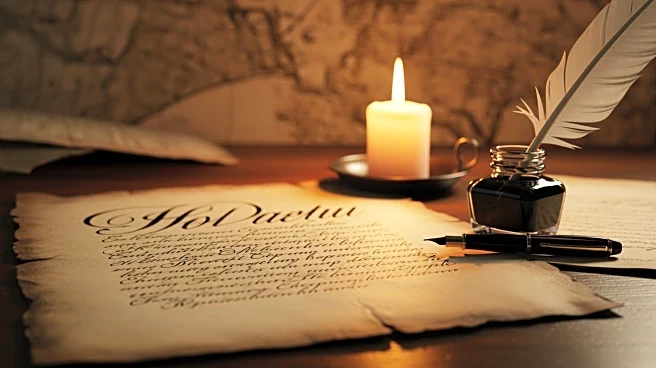
Two secret letters penned by George Washington during the harsh winter of 1779-1780 in the American Revolutionary War have been discovered and are now available for purchase. These letters, written from Washington's headquarters in Morristown, New Jersey,
detail the Continental Army's efforts to monitor loyalist activities and British troop movements. The Raab Collection, a firm specializing in historic documents, currently owns these letters. The first letter, dated December 22, 1779, was addressed to Lt. Col. William De Hart, instructing him to gather intelligence on British sympathizers and prevent them from aiding the enemy. The second letter, dated January 14, 1780, outlines a planned surprise attack on British outposts on Staten Island, which ultimately failed due to a leak of information. These documents provide a rare glimpse into Washington's strategic decisions during a critical period of the war.
Why It's Important?
The discovery and sale of these letters are significant as they offer a direct insight into the strategic thinking and challenges faced by George Washington during the Revolutionary War. They highlight the complexities of wartime communication and intelligence gathering in the 18th century. For historians and collectors, these documents are invaluable, providing a tangible connection to the past and enhancing the understanding of the Revolutionary War's dynamics. The letters also underscore the persistent threat posed by loyalists to the American cause, illustrating the internal divisions within the colonies. As the United States approaches its 250th anniversary, these letters serve as a poignant reminder of the nation's struggle for independence and the leadership of its first president.
What's Next?
The Raab Collection is selling these letters, with one priced at $150,000 and the other at $80,000. As these documents enter the market, they are likely to attract interest from historians, collectors, and institutions dedicated to preserving American history. The sale of such artifacts may also prompt further exploration and discovery of other historical documents from the Revolutionary War era. Additionally, these letters could be featured in exhibitions or educational programs, providing the public with an opportunity to engage with the nation's founding history.