
What's Happening?
A new study highlights the fragility of low Earth orbit, warning that a major disruption could lead to a catastrophic collision in as little as 2.8 days. The study, led by Sarah Thiele, introduces the Collision
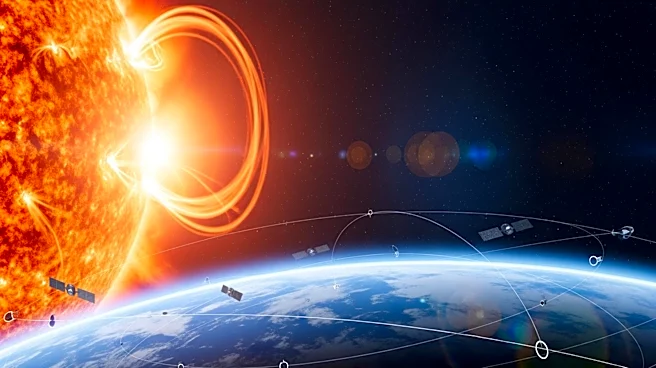
Realization And Significant Harm (CRASH) Clock, which estimates the time until a serious collision if satellite control is lost. The increasing congestion in low Earth orbit, driven by mega constellations like Starlink, poses a significant risk. Solar storms, which can disrupt satellite tracking and maneuvers, exacerbate this threat, potentially leading to a cascade of collisions.
Why It's Important?
The findings underscore the critical importance of maintaining control over satellite operations to prevent collisions that could generate space debris. Such debris poses long-term risks to space exploration and satellite operations, potentially leading to the Kessler syndrome, where cascading collisions render certain orbits unusable. The study calls attention to the need for improved space traffic management and international cooperation to mitigate these risks. The potential impact on global communications, navigation, and weather monitoring systems highlights the broader implications for society and the economy.