







What's Happening?
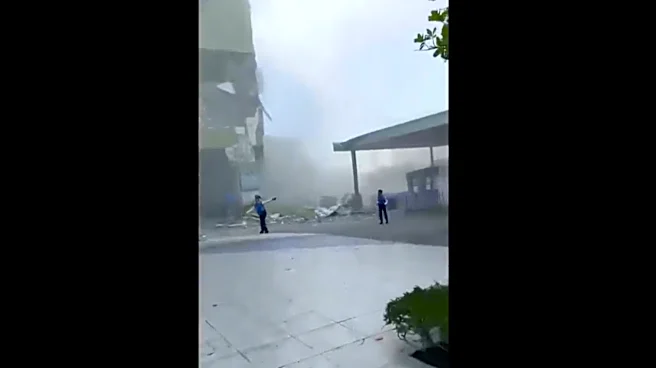
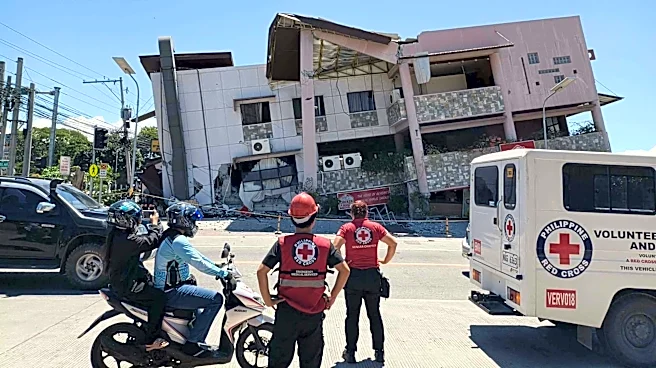
A powerful 7.8-magnitude earthquake struck off the coast of the Philippines, resulting in significant casualties and damage. The earthquake, which occurred on June 7, 2026, led to the deaths of more than 30 people and injured hundreds. The tremors caused
buildings to collapse, including a restaurant in General Santos City, and displaced thousands of villagers. The magnitude and depth of the earthquake were reported differently by various agencies, with the Philippine Institute of Volcanology and Seismology noting a magnitude of 7.0 and a depth of 10km, while the US Geological Survey and the German Research Centre for Geosciences both recorded a magnitude of 7.8 but with differing depths.
Why It's Important?
The earthquake's impact is significant due to the loss of life, injuries, and displacement of thousands of people. Such natural disasters strain local resources and emergency services, highlighting the need for effective disaster preparedness and response strategies. The event also underscores the vulnerability of the region to seismic activity, which can have long-term economic and social repercussions. The destruction of infrastructure and homes can lead to economic challenges, affecting livelihoods and the local economy. Additionally, the potential for aftershocks and further damage remains a concern for the affected communities.
What's Next?
In the aftermath of the earthquake, rescue and relief operations are likely to be a priority for the Philippine government and international aid organizations. Efforts will focus on providing medical care, shelter, and food to those affected. The government may also conduct assessments to evaluate the structural integrity of buildings and infrastructure to prevent future casualties. Long-term recovery plans will be essential to rebuild communities and restore normalcy. The international community may offer support and assistance to aid in the recovery efforts.
Beyond the Headlines
The earthquake highlights the broader issue of disaster preparedness in regions prone to seismic activity. It raises questions about building codes and the resilience of infrastructure in the face of natural disasters. The event may prompt discussions on improving early warning systems and community education to better prepare for future earthquakes. Additionally, the psychological impact on survivors and the need for mental health support should not be overlooked as part of the recovery process.