

What's Happening?
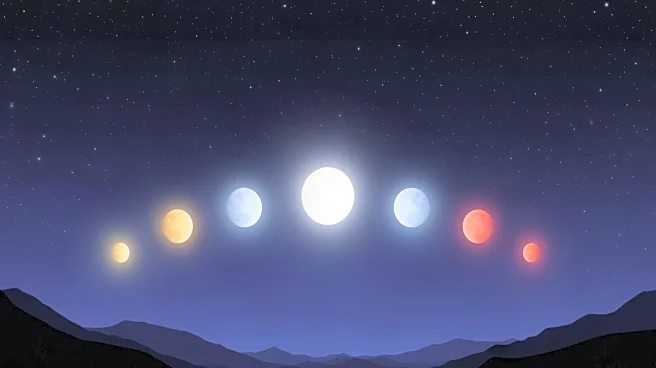
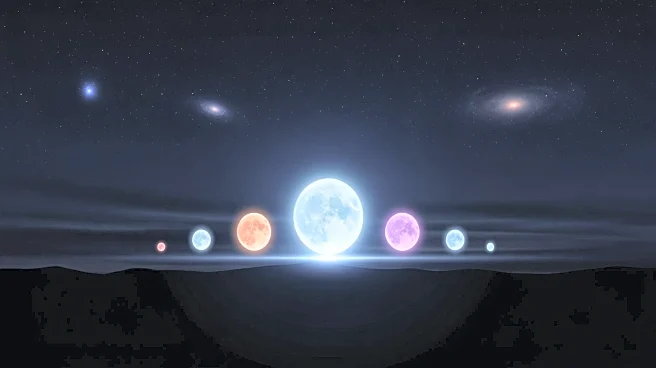
A rare astronomical event known as a 'planetary parade' is set to occur on February 28, where six planets will be visible in the night sky simultaneously. According to NASA, Venus, Mercury, Saturn, Neptune, Uranus, and Jupiter will align, offering a unique
viewing opportunity. The event will be visible shortly after sunset, with Venus, Mercury, and Saturn appearing close to the horizon. Neptune will require a telescope for viewing, while Jupiter will be visible high in the southern sky. This alignment provides a rare chance for stargazers to observe multiple planets at once, although the viewing window is limited to about 45 minutes after sunset.
Why It's Important?
This planetary alignment is significant for both amateur and professional astronomers as it offers a rare opportunity to observe multiple planets in a single evening. Such events can inspire public interest in astronomy and provide educational opportunities for schools and science centers. Additionally, these alignments can help scientists study the planets' positions and movements, contributing to our understanding of the solar system's dynamics. The event also highlights the importance of clear skies and unobstructed views for optimal observation, emphasizing the role of environmental conditions in astronomical studies.
What's Next?
Following this event, astronomers and enthusiasts will likely continue to monitor the skies for other celestial phenomena. The next significant astronomical event will be a total lunar eclipse, which will also provide opportunities for observation and study. Additionally, the data collected during the planetary parade could be used for further research into planetary alignments and their effects on Earth's night sky visibility. Public interest generated by this event may lead to increased participation in future skywatching activities and events.