







What's Happening?
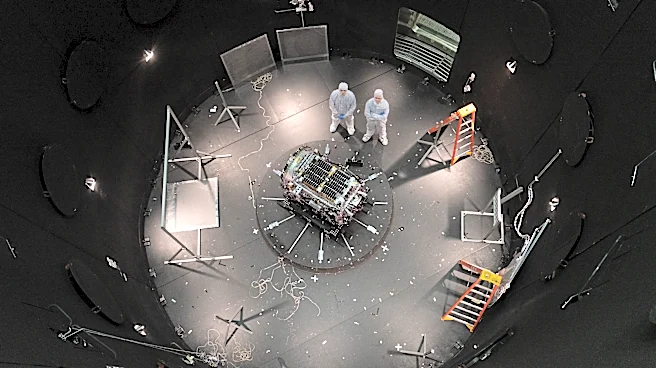
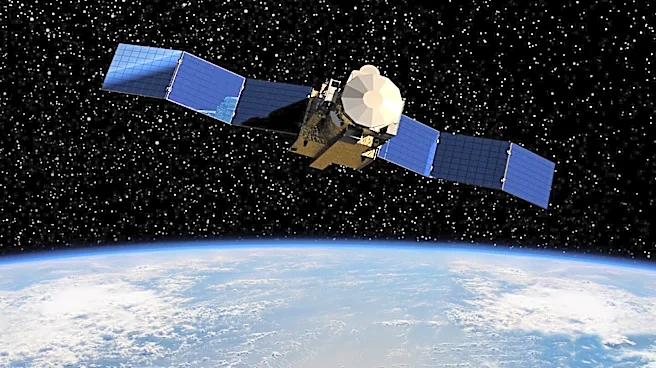
The BepiColombo spacecraft, a joint mission by the European and Japanese space agencies, is set to enter orbit around Mercury in November after an eight-year journey through the inner solar system. Launched in October 2018, BepiColombo consists of a transfer
module and two orbiters: the European Mercury Planetary Orbiter and Japan's Mio. These orbiters will study Mercury's surface, interior, and magnetic field. The mission has faced challenges, including a thruster issue that delayed its arrival by nearly a year. BepiColombo's approach involves a series of planetary flybys to gradually slow down and allow Mercury's gravity to capture it into orbit.
Why It's Important?
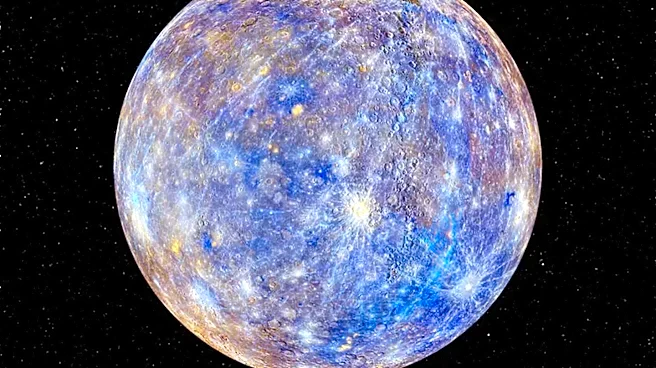
This mission marks only the third visit to Mercury and the second time a spacecraft will orbit the planet, providing a rare opportunity to study one of the solar system's least-explored planets. Understanding Mercury's unique characteristics, such as its large iron core and magnetic field, could offer insights into planetary formation and evolution. The mission's success could also enhance international collaboration in space exploration and pave the way for future missions to other challenging destinations in the solar system.
What's Next?
Following its capture into orbit, BepiColombo will separate its orbiters to begin detailed scientific observations. The mission aims to answer key questions about Mercury's composition and magnetic environment, with the main science phase expected to start in 2027. The findings could have significant implications for our understanding of planetary science and the conditions necessary for sustaining magnetic fields.