



What's Happening?
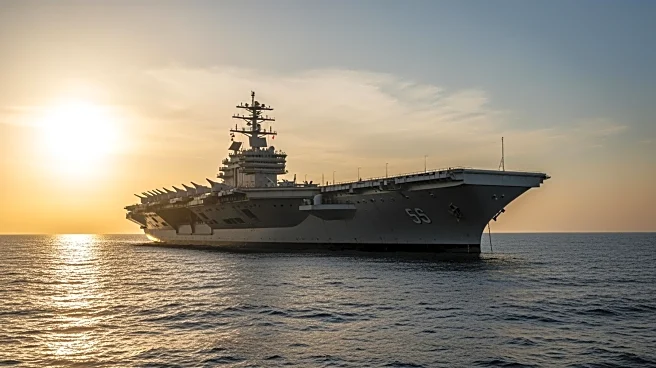
In response to the escalating conflict in the Middle East, French President Emmanuel Macron has announced the deployment of the aircraft carrier Charles de Gaulle to the Mediterranean. This move aims to secure maritime traffic, particularly with the Straits
of Hormuz closed and threats to the Suez Canal and Red Sea shipping routes. France has also dispatched a frigate to Cyprus and engaged in defensive actions, including shooting down drones over its Gulf allies. Macron highlighted the disruption to oil and gas prices and international trade as key reasons for the deployment. He reiterated France's defense commitments to Qatar, Kuwait, and the United Arab Emirates, emphasizing solidarity with these nations.
Why It's Important?
The deployment of the Charles de Gaulle is a significant demonstration of France's military capabilities and its commitment to protecting international trade routes. The Middle East conflict has already impacted global energy prices, and securing these maritime routes is crucial for maintaining economic stability. France's actions also reflect its strategic alliances in the Gulf region and its role in European defense. The situation underscores the complex geopolitical dynamics involving Iran, the U.S., and Israel, with potential ramifications for international law and regional security.
What's Next?
As the conflict continues, France is likely to maintain its military presence in the Mediterranean to ensure the security of maritime routes. Macron's emphasis on international law suggests potential diplomatic initiatives to address the conflict. The international community may increase efforts to mediate and de-escalate tensions, with France potentially playing a key role in these diplomatic endeavors. The situation may also prompt other European nations to enhance their military or diplomatic involvement in the region.