





What's Happening?
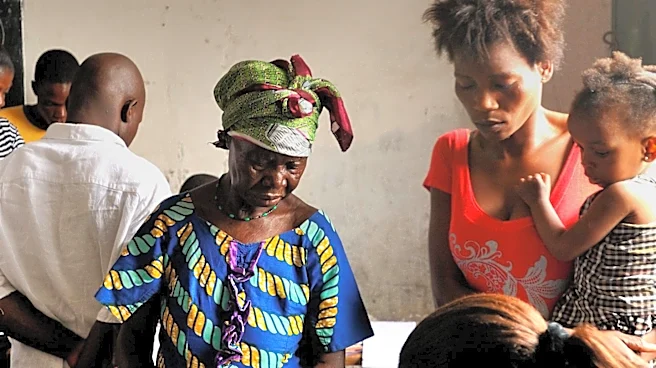
Hundreds of gold miners, previously expelled from Guinea, have started to leave an assembly site in Mali. These miners are being transported by trucks and buses. Mali's authorities reported on November 7 that approximately 160,000 people have been expelled from Guinea since
the operations began, with six deaths recorded and concerns raised about a 'humanitarian emergency.' This expulsion follows a crackdown on illegal mining in Guinea's Siguiri region, which took effect on November 2. Over 1,200 individuals involved in alleged gold panning have been arrested, including citizens from Guinea, Burkina Faso, Mali, Togo, Niger, Ivory Coast, and Ghana. The crackdown aims to address environmental challenges such as land degradation and water pollution caused by artisanal gold mining in Guinea, a country rich in mineral resources like gold and bauxite.
Why It's Important?
The mass expulsion and subsequent movement of gold miners from Guinea to Mali highlight significant humanitarian and economic challenges in the West African region. The reported 160,000 expulsions and six deaths underscore the severe human cost of such crackdowns, potentially leading to a humanitarian crisis as displaced individuals seek new livelihoods and shelter. Economically, the disruption of artisanal gold mining, while intended to curb environmental damage, can severely impact the informal economies of these nations, where many rely on mining for income. The influx of a large population into Mali also places strain on its resources and infrastructure, potentially leading to social and economic instability. The involvement of citizens from multiple West African countries also points to the regional nature of artisanal mining and its associated challenges.
What's Next?
The immediate next steps involve the continued transportation of the expelled miners from the assembly site in Mali. Authorities in Mali will likely need to address the humanitarian concerns, including providing aid and support for the displaced population. The long-term implications for the miners include finding alternative sources of income and potentially integrating into new communities, which could be challenging given the scale of displacement. In Guinea, the government will likely continue its efforts to enforce the ban on unregulated mining and mitigate environmental damage. This situation may also prompt regional discussions among West African nations regarding cross-border migration, illegal mining, and humanitarian aid coordination.
Beyond the Headlines
This event underscores the complex interplay between resource management, environmental protection, and human rights in resource-rich developing nations. While Guinea's crackdown on illegal mining aims to protect its environment from degradation and pollution, the method of expulsion has created a significant humanitarian crisis. This raises ethical questions about the balance between national resource control and the welfare of marginalized populations who depend on these activities for survival. The situation also highlights the broader issue of informal economies and the challenges governments face in regulating them without causing widespread social disruption. The regional nature of the mining activities and the diverse nationalities of those expelled suggest a need for coordinated regional policies on resource extraction and labor migration to prevent similar crises in the future.