



What's Happening?
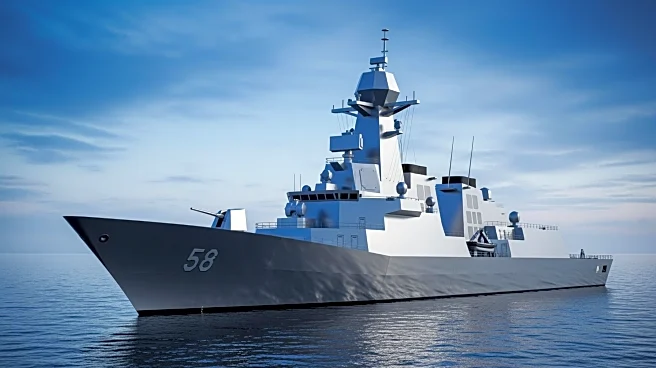
South Korea's Defense Acquisition Program Promotion Committee has decided to hold a competitive bidding process between Hanwha Ocean and HD Hyundai Heavy Industries for the construction of the country's first domestically-produced destroyer. This decision
follows over two years of deliberation and challenges, including corporate espionage incidents that threatened the project's progress. The initiative, which began in 2011, aims to leverage South Korea's shipbuilding and electronic warfare expertise to create a next-generation destroyer independent of U.S. weapon systems. The project, valued at approximately $5.3 billion, is crucial for the future of South Korea's Navy, as it plans to replace its aging Gwanggaeto class destroyers by 2032. Both companies have proposed advanced designs featuring fully electric propulsion systems and stealth capabilities, with the first vessel expected by 2030.
Why It's Important?
This development is significant as it marks a strategic shift for South Korea towards self-reliance in defense capabilities, reducing dependency on U.S. military technology. The competition between Hanwha and Hyundai not only aims to ensure fairness and innovation but also reflects South Korea's commitment to enhancing its naval strength amid regional security challenges. The successful execution of this project could bolster South Korea's defense industry, potentially leading to increased exports and technological advancements. Additionally, the move aligns with broader geopolitical trends where nations are seeking to strengthen their military autonomy in response to evolving global threats.
What's Next?
The next steps involve finalizing the contract for the detailed design phase by the end of 2026, with construction expected to commence soon after. Both Hanwha and Hyundai will continue to refine their proposals, focusing on integrating cutting-edge technologies such as anti-drone systems and laser weapons. The outcome of this competition will likely influence future defense procurement strategies and could set a precedent for similar projects. Stakeholders, including the South Korean government and military, will closely monitor the progress to ensure the project meets its strategic objectives and timelines.