







What's Happening?
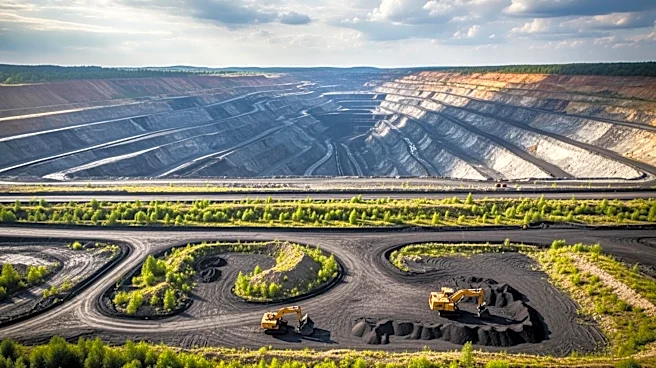
The Colombian government has urged Glencore to engage in discussions with local authorities and community representatives regarding the closure of the Cerrejon coal mine. The mine, one of the largest open-pit coal mines globally, is operated by Glencore under
a concession set to expire in 2034. The government is advocating for early closure talks to address investments in energy, workforce retraining, and clean energy ventures. This move aligns with President Gustavo Petro's policy to transition away from coal and other hydrocarbons, as part of a broader shift towards renewable energy.
Why It's Important?
The push for early closure discussions of the Cerrejon mine reflects Colombia's commitment to transitioning to clean energy. This decision could have significant implications for the coal industry and local economies dependent on mining. The closure of such a large operation may lead to economic challenges, including job losses and reduced local revenue. However, it also presents opportunities for investment in renewable energy and sustainable development. The outcome of these discussions could set a precedent for other countries seeking to balance economic interests with environmental goals.
What's Next?
The upcoming discussions between Glencore, local authorities, and community leaders will likely focus on creating a sustainable transition plan. Key considerations will include economic support for affected workers and communities, as well as investment in alternative energy projects. The Colombian government may also explore policy measures to facilitate this transition. The international community will be watching closely, as the outcome could influence global energy policies and corporate strategies in the mining sector.