






What's Happening?
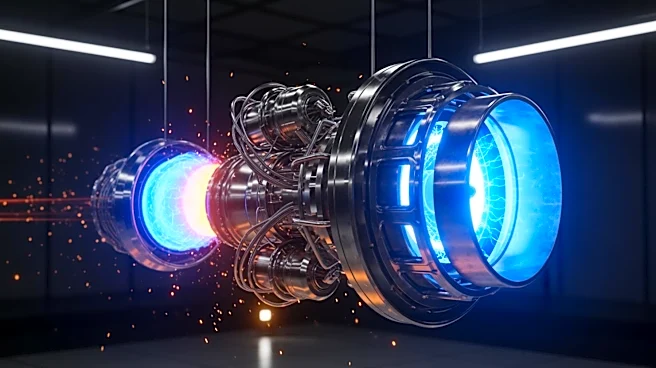
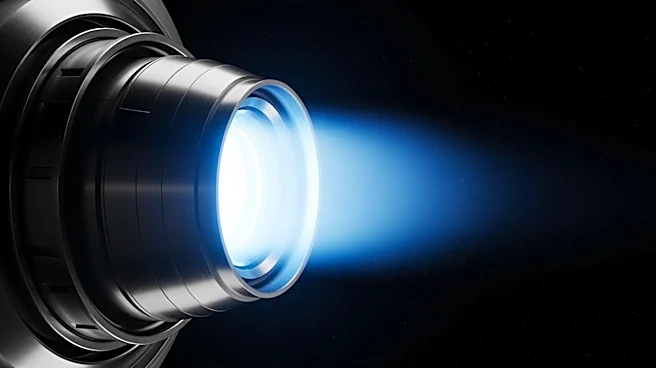
NASA has successfully tested a novel electromagnetic thruster that uses lithium metal vapor, marking a significant step towards enabling crewed missions to Mars. Conducted at the Jet Propulsion Laboratory, the test achieved power levels exceeding any
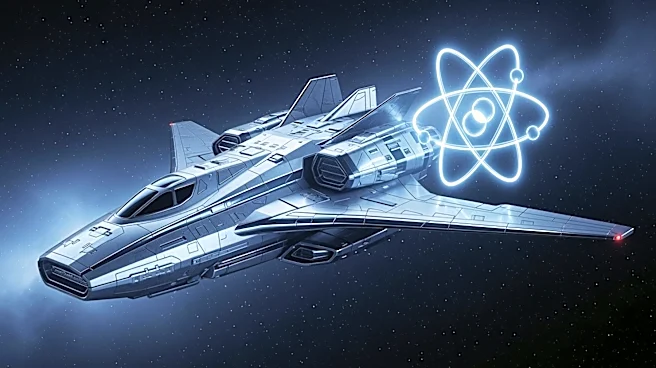
previous electric thruster tests in the United States. This lithium-fed magnetoplasmadynamic thruster could become part of a nuclear electric propulsion system, offering a more efficient alternative to traditional chemical rockets. The thruster operates by using high currents and magnetic fields to accelerate lithium plasma, achieving power levels up to 120 kilowatts.
Why It's Important?
The development of this thruster represents a major advancement in propulsion technology, potentially reducing the amount of propellant needed for space missions by up to 90% compared to chemical rockets. This efficiency could make long-duration missions, such as those to Mars, more feasible by reducing launch costs and increasing payload capacity. The successful test underscores NASA's commitment to advancing technologies that will enable human exploration of Mars, aligning with broader goals of expanding human presence in the solar system.
What's Next?
Following the initial successful test, NASA plans to conduct a series of further tests to refine the thruster's design and performance. These tests will provide valuable data to inform the development of a propulsion system capable of supporting human missions to Mars. As NASA continues to invest in this technology, the agency aims to integrate it into future spacecraft designs, potentially revolutionizing space travel and paving the way for human exploration of the Red Planet.