




What's Happening?
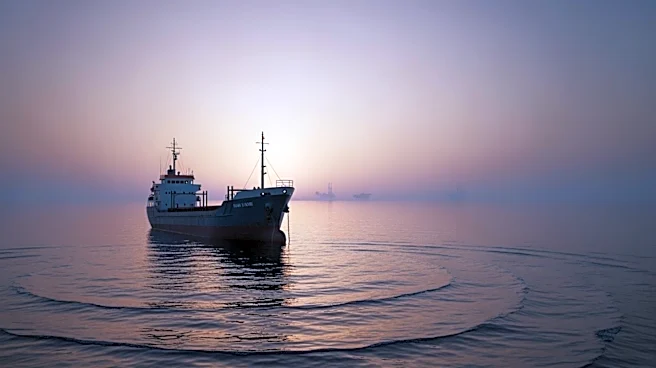
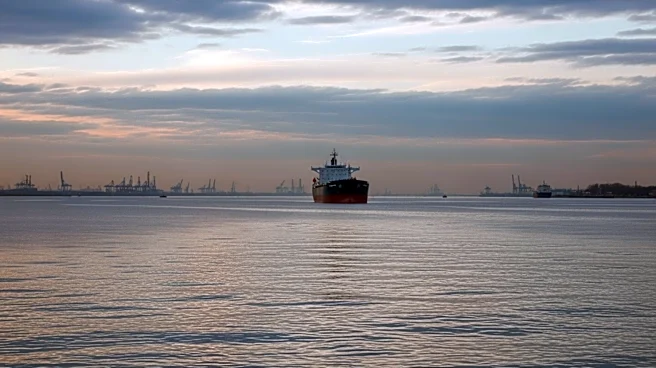
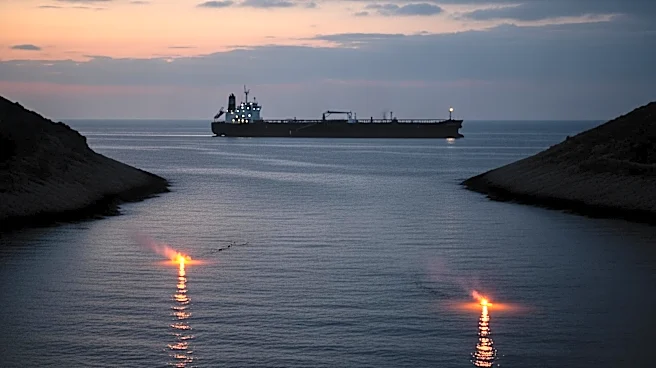
Indian officials have disclosed an incident involving the Iranian Revolutionary Guard Corps (IRGC) firing warning shots at a small product tanker, Chiron 7, carrying Indian seafarers. The tanker, managed by a UAE company and owned by a Honduran firm,
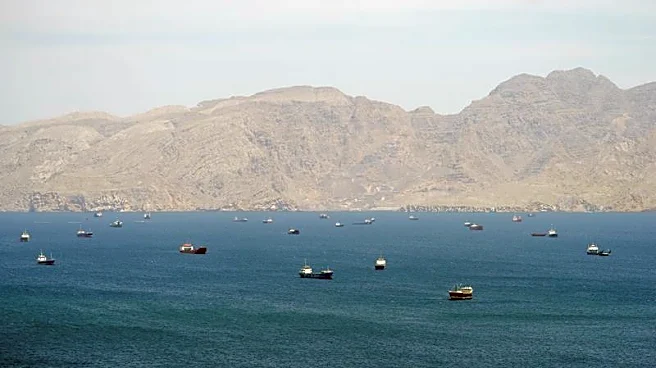
was reportedly targeted while in the Persian Gulf near the Strait of Hormuz. The IRGC's actions were described as an attempt to halt the tanker's transit through the strategic waterway. This incident is part of a series of recent confrontations in the region, including attacks on other vessels, highlighting the ongoing tensions in the Persian Gulf.
Why It's Important?
The Strait of Hormuz is a critical chokepoint for global oil transportation, and any disruption in this area can have significant implications for international trade and energy markets. The firing of warning shots by Iran underscores the heightened geopolitical tensions in the region, which could lead to increased volatility in oil prices and impact global supply chains. For India, the safety of its seafarers and vessels is a priority, and such incidents may prompt diplomatic engagements to ensure the security of its maritime interests. The situation also reflects broader regional dynamics, where strategic waterways are often leveraged as points of contention in international relations.
What's Next?
In response to the incident, India is likely to engage in diplomatic discussions with Iran to address the safety concerns of its seafarers and ensure the free passage of its vessels through the Strait of Hormuz. The international community, particularly countries reliant on oil shipments through this route, will be monitoring the situation closely. Further incidents could lead to calls for increased naval presence or international mediation to de-escalate tensions. Additionally, shipping companies may reassess their routes and security measures to mitigate risks associated with transiting through the Persian Gulf.