






What's Happening?
A fire truck in Watertown, New York, crashed into two utility poles on Washington Street, resulting in injuries to one firefighter. The incident occurred as the truck was returning from a fire alarm call. The driver of the fire truck reportedly experienced
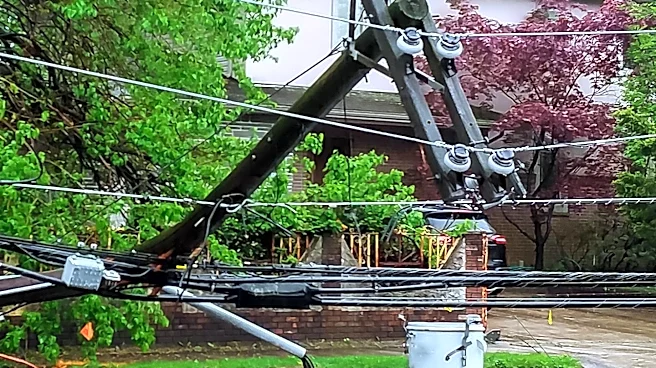
a medical emergency, losing consciousness, while a firefighter in the passenger seat attempted to revive them. The truck initially struck a pole at the intersection of Washington Street and Bowers Avenue, then continued for several yards before hitting a second pole near Haley Street. One of the utility poles was completely sheared off. The injured firefighter was transported to Samaritan Medical Center, and their current condition is unknown. The firefighter in the passenger seat was checked at the scene and did not require medical attention. The fire truck involved in the crash is currently inoperable, and the city has offered assistance to the Town of Watertown Fire Department.
Why It's Important?
This incident highlights the inherent risks faced by emergency responders, even during routine operations. The injury to a firefighter and the damage to essential infrastructure, such as utility poles, underscore the potential for significant disruption and cost. The loss of an operational fire truck can impact the community's emergency response capabilities, potentially increasing response times or requiring mutual aid from neighboring departments. This situation also brings attention to the importance of firefighter health and safety protocols, particularly concerning medical emergencies while on duty. The damage to utility poles can lead to power outages, affecting residents and businesses, and requiring resources for repair and restoration. The city's offer of assistance demonstrates inter-departmental cooperation in maintaining public safety services.
What's Next?
Investigations into the exact cause of the medical emergency and the crash are likely to follow. The Town of Watertown Fire Department will need to assess the damage to the fire truck and determine the timeline and cost for its repair or replacement. The injured firefighter's recovery will be monitored, and support will be provided. Utility companies will be working to repair or replace the damaged poles and restore any affected power services. The incident may also prompt a review of existing safety procedures and medical screening protocols for emergency vehicle operators to prevent similar occurrences in the future. The temporary reduction in the fire department's fleet may necessitate continued coordination with neighboring fire departments to ensure adequate coverage for the community.
Beyond the Headlines
Beyond the immediate impact, this event could spark broader discussions about the mental and physical well-being of first responders. The demanding nature of their work, coupled with potential health issues, can have serious consequences for both the individuals and the communities they serve. There may be a renewed focus on comprehensive health programs and regular medical evaluations for firefighters to mitigate risks. Furthermore, the incident could lead to a re-evaluation of infrastructure resilience, particularly in areas where utility poles are vulnerable to vehicle impacts. The financial burden of such incidents, including medical costs, vehicle repairs, and infrastructure restoration, often falls on local governments and taxpayers, prompting considerations for improved preventative measures and insurance coverage.