






What's Happening?
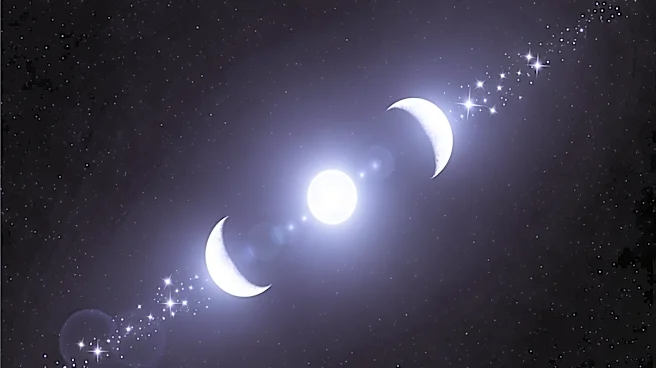
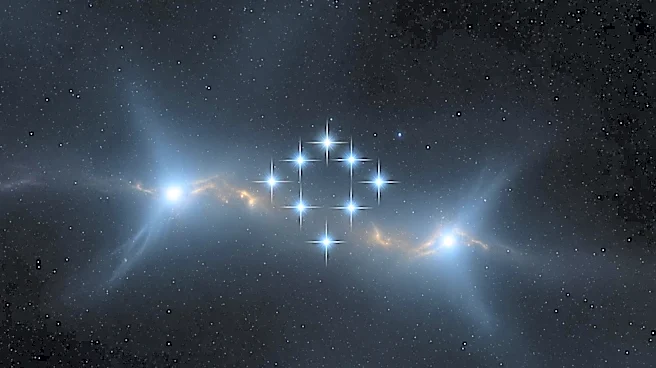
A new hypothesis suggests that the myths surrounding the Pleiades star cluster, known as the 'Seven Sisters,' may date back 100,000 years. Researchers Ray and Barnaby Norris used data from the Gaia space telescope to simulate the appearance of the Pleiades to early
Homo sapiens. They found that two stars, Atlas and Pleione, which are now indistinguishable to the naked eye, were once separated by a larger angular distance, making them visible as distinct stars. This could explain why many cultures have similar myths about the Pleiades, as they might have originated when the stars were visibly separate. The researchers argue that the story has been passed down through generations, potentially surviving for 4,000 generations, challenging previous assumptions about the longevity of oral traditions.
Why It's Important?
The hypothesis, if true, could significantly alter our understanding of oral traditions and cultural transmission. It suggests that stories can be preserved for tens of thousands of years, far longer than previously thought. This has implications for the study of human history and anthropology, as it challenges the notion that oral stories dissolve after a few thousand years. The idea that a story could survive for 100,000 years through oral tradition alone could lead to a reevaluation of how ancient cultures preserved and transmitted knowledge. It also highlights the potential for shared cultural origins among diverse groups, suggesting a common narrative thread that spans continents and millennia.