


What's Happening?
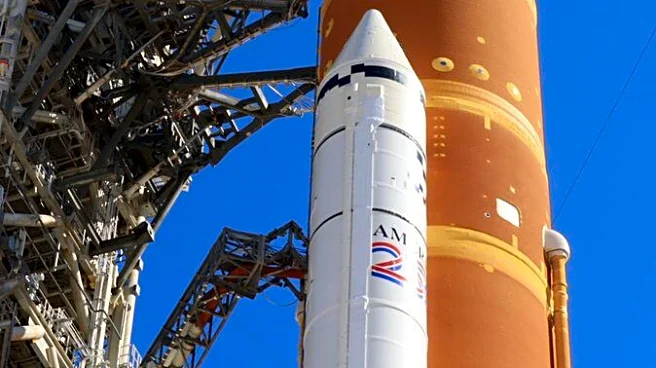
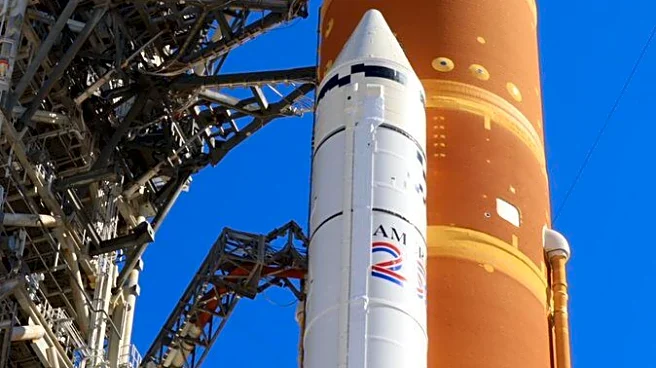
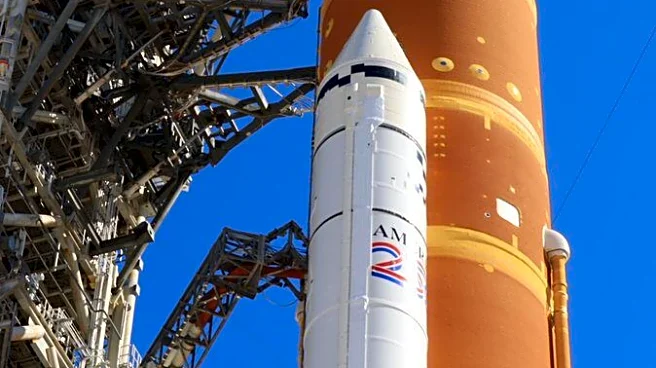
NASA successfully conducted a second rocket fueling test for its Artemis II mission, a crucial step in determining the launch schedule for the first crewed lunar mission in over 50 years. The test involved pumping over 700,000 gallons of supercold fuel into
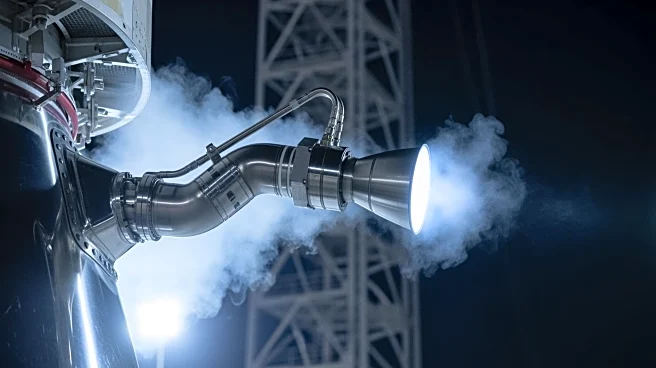
the Space Launch System rocket at Kennedy Space Center. This follows a previous test that was halted due to hydrogen leaks. Engineers have since replaced faulty seals and a clogged filter. The test's success is pivotal for setting a potential March launch date for the mission, which will send four astronauts on a 10-day trip around the moon.
Why It's Important?
The Artemis II mission represents a significant milestone in NASA's efforts to return humans to the moon, marking the first such mission since the Apollo program. Successfully addressing the technical challenges of fueling the Space Launch System is crucial for ensuring the safety and reliability of future lunar missions. This mission is part of a broader initiative to establish a sustainable human presence on the moon, which could pave the way for future exploration of Mars and beyond. The success of Artemis II could also bolster international collaboration and inspire renewed interest in space exploration.
What's Next?
NASA will continue to monitor the results of the fueling test and make any necessary adjustments before confirming a launch date. The agency is focused on ensuring all systems are fully operational and safe for the crew. If the March launch proceeds as planned, it will be a significant step forward in the Artemis program. Future missions, including Artemis III, aim to land astronauts on the lunar surface, further advancing NASA's long-term goals for lunar exploration. Continued success in these missions could lead to increased funding and support for NASA's exploration initiatives.