






What's Happening?
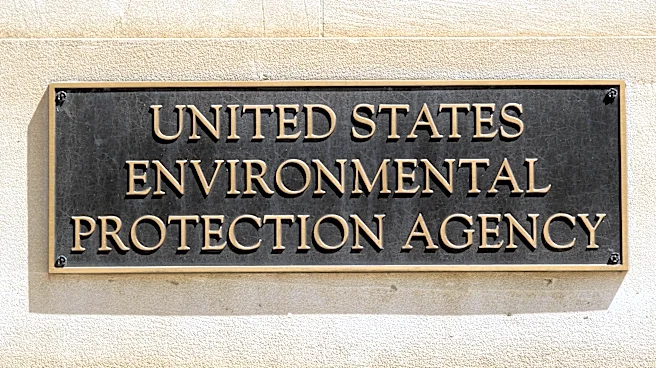
The U.S. Environmental Protection Agency (EPA) has published final Significant New Use Rules (SNUR) for certain chemical substances, including multi-walled carbon nanotubes (PMN P-23-105). These rules, effective January 4, 2027, mandate that any person
intending to manufacture or process these nanotubes for a designated significant new use must notify the EPA at least 90 days prior to commencing the activity. The EPA's action is based on an Order issued under the Toxic Substances Control Act (TSCA). The SNUR specifies requirements for workplace protection, hazard communication, and industrial, commercial, and consumer activities. Notably, the hazard communication requirements indicate that this substance may cause eye irritation, skin sensitization, respiratory sensitization, specific target organ toxicity, reproductive toxicity, genetic toxicity, and carcinogenicity. For industrial, commercial, and consumer activities, it is a significant new use to manufacture, process, or use the substance in solid form without engineering controls achieving a minimum of 95 percent capture and 99 percent control, unless the substance is in liquid solution or dispersion. Additionally, manufacturing, processing, or using the substance is considered a significant new use if a confidential residual listed in the Order is not present at or below its confidential limit by weight.
Why It's Important?
This EPA ruling is significant for U.S. industries involved in the manufacturing, processing, or use of multi-walled carbon nanotubes, particularly those in solid form. The classification of these nanotubes as potential carcinogens and their association with other severe health risks, including reproductive and genetic toxicity, underscores the EPA's commitment to public health and environmental protection. Companies will face increased regulatory scrutiny and compliance costs, as they must implement stringent workplace protection measures, including respirators with a National Institute for Occupational Safety and Health (NIOSH) assigned protection factor of at least 1,000, and robust hazard communication protocols. The requirement for a 90-day pre-notification for significant new uses provides the EPA with a critical window to assess potential risks before new applications are deployed, potentially preventing widespread exposure and long-term health consequences. This move could also spur innovation in safer alternative materials or more contained manufacturing processes within the nanotechnology sector, impacting research and development investments.
What's Next?
As the SNUR becomes effective on January 4, 2027, companies involved with multi-walled carbon nanotubes (PMN P-23-105) must prepare to comply with the new regulations. This includes reviewing their current manufacturing and processing methods, updating hazard communication materials, and implementing enhanced workplace safety measures. Any entity planning a 'significant new use' of these nanotubes will need to submit a Significant New Use Notice (SNUN) to the EPA and await the agency's review and determination before proceeding. This process could lead to delays in product development or market entry for new applications of these materials. Stakeholders, including industry associations and environmental groups, will likely monitor the implementation and enforcement of these rules closely. The EPA's ongoing oversight will ensure that any new uses of these substances are thoroughly evaluated for their potential impact on human health and the environment, potentially leading to further adjustments or clarifications of the regulations.
Beyond the Headlines
The EPA's SNUR for multi-walled carbon nanotubes highlights a broader trend in environmental regulation: the proactive management of emerging chemical risks, particularly those associated with advanced materials like nanomaterials. The emphasis on carcinogenicity, reproductive toxicity, and genetic toxicity reflects a growing understanding of the subtle yet profound ways chemicals can impact human biology. This regulatory approach could set a precedent for how other novel materials are evaluated and controlled, influencing research and development in materials science towards inherently safer designs. Ethically, it raises questions about the responsibility of manufacturers to fully understand and disclose the long-term health impacts of their products, especially when those products are at the cutting edge of scientific discovery. Culturally, it reinforces the public's expectation that regulatory bodies will act decisively to protect them from potential environmental hazards, even when the full scope of those hazards is still being elucidated.