






What's Happening?
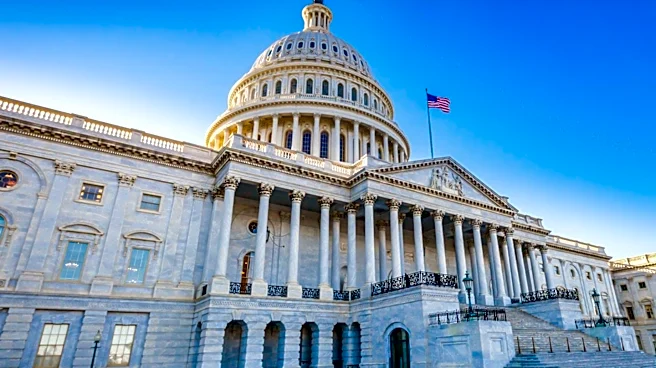
Representative Jeff Crank (CO-05) recently voted in favor of H.R. 9340, the Ratepayer Protection Act. This legislation aims to prevent American consumers from incurring higher utility rates due to the rapid construction and energy demands of Artificial
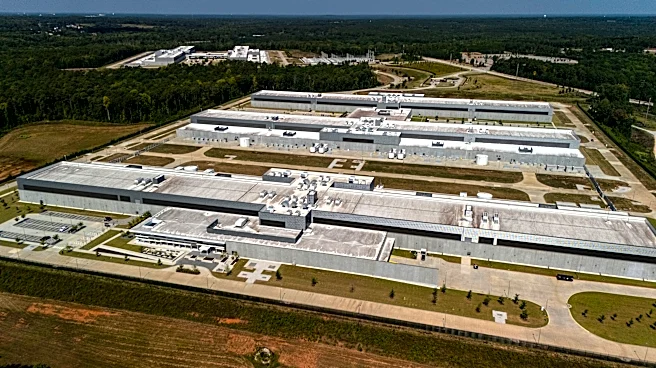
Intelligence (AI) data centers. The bill mandates that state utility regulators consider implementing rules for large-load data centers, specifically those drawing over 100 MW of power. These rules would ensure that such data centers cover the full incremental costs associated with their power consumption, including grid upgrades and new energy generation. Representative Crank, who co-sponsored the act alongside fellow Coloradan Representative Gabe Evans, emphasized that the bill is designed to protect families in Colorado's Fifth Congressional District from increased utility bills. The United States is currently engaged in a race for AI dominance, which is deemed crucial for both economic and national security, yet concerns have arisen regarding the financial burden placed on communities by the energy needs of these new data centers.
Why It's Important?
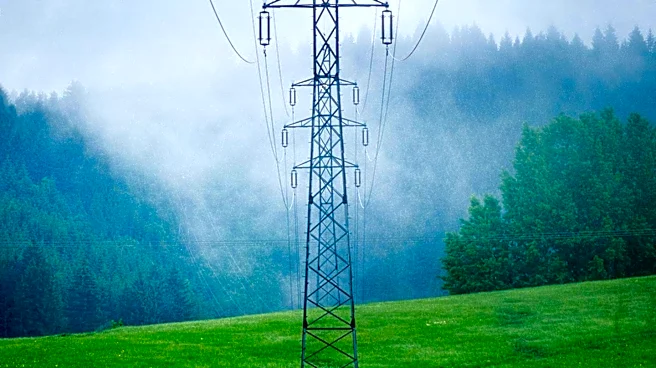
The Ratepayer Protection Act addresses a growing concern about the economic impact of technological advancement on everyday consumers. As AI data centers proliferate, their substantial energy requirements necessitate significant investments in power generation and infrastructure. Without specific regulations, these costs could be passed on to residential and small business ratepayers through higher utility bills. This legislation is important because it seeks to establish a framework where the entities primarily benefiting from these energy-intensive operations—large data centers—are responsible for their associated infrastructure costs. This could prevent a scenario where the pursuit of AI dominance inadvertently leads to increased financial strain on American households. The bill highlights a tension between national technological ambitions and local economic stability, aiming to balance the two by ensuring that the costs of progress are equitably distributed rather than disproportionately borne by consumers.
What's Next?
Following Representative Crank's vote, the Ratepayer Protection Act (H.R. 9340) will continue through the legislative process. If enacted, state utility commissions would be tasked with developing and implementing large-load standards for data centers consuming more than 100 MW of power. This would involve detailed assessments of the incremental costs associated with serving these large loads and establishing mechanisms for data centers to cover these expenses. The outcome of this legislation could set a precedent for how energy-intensive industries are regulated in the context of national technological priorities. Stakeholders, including utility companies, AI data center developers, and consumer advocacy groups, will likely monitor its progress closely, as its passage would necessitate adjustments in business models and regulatory compliance for the energy sector and the burgeoning AI industry.
Beyond the Headlines
The debate surrounding the Ratepayer Protection Act underscores a broader societal challenge: how to manage the externalities of rapid technological growth. While AI development is seen as vital for economic competitiveness and national security, its infrastructure demands present significant environmental and economic considerations. This act touches upon the principle of 'polluter pays' or, in this case, 'consumer of resources pays,' aiming to internalize the costs of high energy consumption rather than externalizing them onto the general public. Beyond immediate utility rates, the legislation could influence the geographic distribution of data centers, encouraging development in areas with robust and affordable energy infrastructure or prompting innovation in energy efficiency within the AI sector. It also highlights the increasing role of legislative bodies in shaping the economic landscape around emerging technologies, ensuring that the benefits of innovation are not overshadowed by unintended burdens on citizens.