






What's Happening?
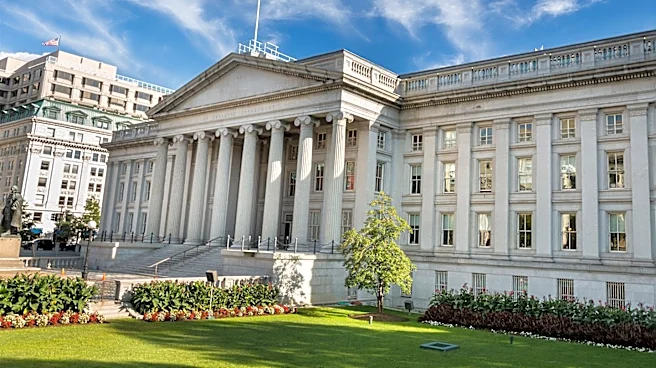
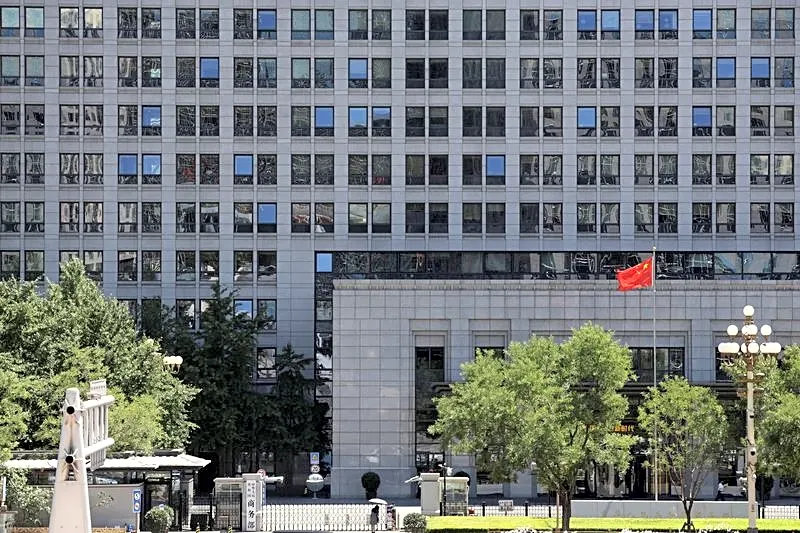
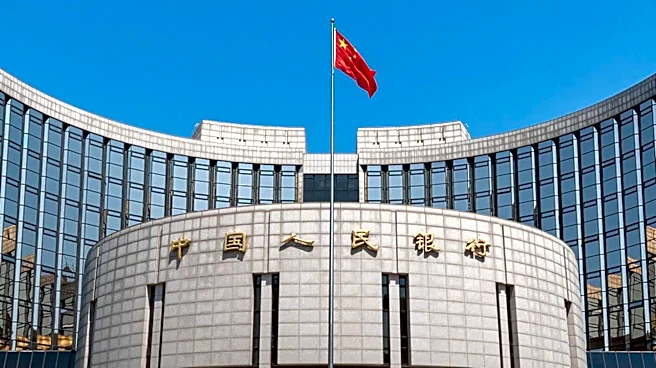
China's commerce ministry has called on the United States to cease expanding restrictions on American investments in China. This appeal follows a proposal issued by the U.S. Treasury Department to update its outbound-investment security program. The proposed
changes would broaden the scope of restricted sectors to include biotechnology and expand coverage for high-performance computing and hypersonic systems. Beijing views these proposed measures as a discriminatory widening and intensification of investment curbs specifically targeting China. The Chinese ministry stated its firm opposition to the U.S. proposal, asserting that it would harm bilateral economic ties and contradict agreements made by the presidents of both countries during their two recent meetings. The U.S. Treasury, however, maintains that these measures are designed to prevent U.S. capital from aiding foreign adversaries in developing dual-use strategic technologies that could pose a threat to U.S. national security. The existing U.S. program already restricts certain investments in China related to semiconductors, quantum technologies, and artificial intelligence.
Why It's Important?
This development is significant as it highlights escalating economic tensions between the U.S. and China, two of the world's largest economies. The U.S. move to restrict investments in sensitive technology sectors reflects a broader strategy to safeguard national security and prevent the transfer of critical technological advancements to potential adversaries. For U.S. businesses and investors, these expanded curbs could limit opportunities in China's rapidly growing tech and biotech industries, potentially impacting their global investment strategies and profitability. Conversely, the restrictions aim to protect U.S. innovation and maintain a competitive edge in key technological domains. China's strong opposition and threat of unspecified countermeasures suggest a potential for further retaliatory actions, which could lead to a more fragmented global economy and increased uncertainty for international trade and investment. The dispute underscores the ongoing struggle for technological supremacy and national security between the two global powers.
What's Next?
Following China's strong objection, the U.S. Treasury Department will likely proceed with its proposed updates to the outbound-investment security program, potentially finalizing the inclusion of biotechnology and expanded coverage for high-performance computing and hypersonic systems. China has reserved the right to take unspecified countermeasures, which could manifest as new tariffs, investment restrictions on U.S. companies operating in China, or other economic retaliations. This could further strain U.S.-China relations and impact global supply chains, particularly in the technology and biotechnology sectors. Businesses and investors will need to closely monitor these developments and adapt their strategies to navigate the evolving regulatory landscape and potential trade disruptions. The situation may also prompt other countries to re-evaluate their own investment screening mechanisms and technological partnerships, contributing to a more complex international economic environment.
Beyond the Headlines
The proposed U.S. investment curbs and China's reaction extend beyond immediate economic implications, touching upon deeper issues of technological sovereignty and geopolitical competition. This move reflects a growing global trend where national security concerns are increasingly intertwined with economic policy, particularly in advanced technology sectors. The ethical dimension arises from the potential impact on scientific collaboration and innovation, as restrictions on investment could hinder the free flow of research and development that often benefits from international partnerships. Legally, these measures raise questions about the extraterritorial reach of national laws and the fairness of investment screening processes. Culturally, the decoupling of technological ecosystems could lead to divergent standards and practices, potentially creating a 'tech iron curtain' that separates global innovation into distinct blocs. This long-term shift could reshape the global technological landscape, influencing everything from consumer products to military capabilities and the future of scientific progress.