


What's Happening?
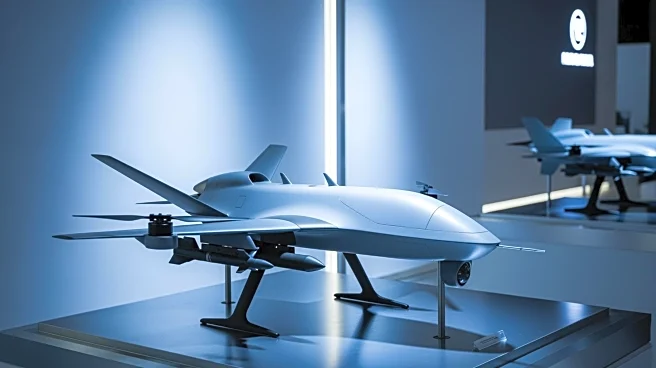
Hecto Drone, a Denmark-based company, showcased its HD-606 armed unmanned aerial vehicle (UAV) prototype at the Enforce Tac 2026 exhibition in Nuremberg, Germany. The HD-606 is a long-endurance, hybrid-powered sextcopter capable of carrying heavy payloads.
It features a pair of petrol-powered generators that provide 14,000 W of output, feeding into a battery array that powers its six blade motors. The UAV can operate on petrol and a 10 Ah battery, allowing it to stay airborne for up to 3.5 hours with a 25 kg payload or eight hours without a slung payload. The HD-606 is designed for multiple mission roles, including multi-sensor surveillance and heavy payload deliveries. At the exhibition, it was displayed with dual, magazine-fed .50 Calibre heavy machine guns, although the armed configuration is still in the prototype stage. The UAV is being developed in partnership with Danish weapons manufacturer Small Arms Industry (SAI).
Why It's Important?
The development of the HD-606 armed UAV represents a significant advancement in military technology, offering enhanced capabilities for precision fire support, border defense, and maritime missions. The ability to carry heavy payloads and operate autonomously could provide military forces with a versatile tool for various operational scenarios. This development is particularly relevant for the U.S. defense industry, which is continually seeking advanced technologies to maintain strategic advantages. The partnership with Small Arms Industry (SAI) highlights the international collaboration in defense technology development, which could lead to further innovations and improvements in UAV capabilities. The HD-606's potential to support fully autonomous missions could also influence future military strategies and operational planning.
What's Next?
As the HD-606 armed configuration is still in development, further testing and trials are expected to refine its capabilities. The focus will likely be on enhancing its autonomous features, which are currently not available in the armed version. The collaboration with Small Arms Industry (SAI) may lead to the integration of additional weapon systems, expanding the UAV's operational roles. The U.S. military and other international defense forces may closely monitor these developments, considering potential procurement or adaptation of similar technologies. The ongoing advancements in UAV technology could also prompt discussions on regulatory and ethical considerations regarding the use of armed drones in military operations.
Beyond the Headlines
The introduction of armed UAVs like the HD-606 raises important ethical and legal questions about the use of autonomous weapons in warfare. The potential for fully autonomous missions could lead to debates on accountability and decision-making in combat scenarios. Additionally, the proliferation of such technologies may influence global military dynamics, prompting other nations to develop or acquire similar capabilities. The integration of advanced UAVs into military operations could also impact traditional military roles and strategies, necessitating new training and operational doctrines. As these technologies evolve, there will be a need for international agreements and regulations to address the implications of autonomous and armed UAVs.