


What's Happening?
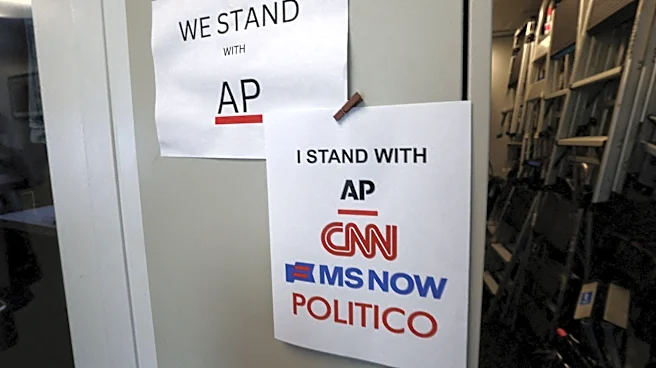
A hearing regarding President Trump’s White House press ban, which targeted CNN, MS NOW, and Politico, concluded without an immediate ruling. The Trump-appointed judge in the case, Timothy Kelly, appeared skeptical of the administration’s arguments for
banning the outlets. The Justice Department attempted to justify the ban by claiming the three organizations' reporting jeopardized national security. However, President Trump himself had previously indicated that he singled out these organizations due to what he characterized as negative and inaccurate stories. The ban remains in place until Judge Kelly issues a ruling, which he stated would be "as soon as possible." Even outlets typically sympathetic to President Trump, such as Fox News, boycotted White House events in protest of the ban, indicating broad concern within the media industry.
Why It's Important?
This ongoing legal battle is crucial for defining the boundaries of press freedom and access to government information in the United States. The administration's attempt to restrict access based on perceived negative coverage, rather than clear security threats, raises significant First Amendment concerns. The judge's skepticism suggests that the administration's arguments may not hold up in court, which could set an important precedent for protecting journalists' ability to cover the White House without fear of arbitrary exclusion. The case highlights the tension between a president's desire to control narratives and the public's right to receive information from a diverse range of sources. The outcome will influence how future administrations interact with the press and could impact the transparency of government operations.
What's Next?
Judge Timothy Kelly is expected to issue a ruling "as soon as possible" regarding the White House press ban. Until then, the ban on CNN, MS NOW, and Politico remains in effect. President Trump has already indicated that he would "almost without question" appeal any decision against him, suggesting that the legal challenge could continue through higher courts regardless of Judge Kelly's initial ruling. The administration may also face pressure to articulate clearer, non-content-based criteria for press access if the court finds their current justification insufficient. The broader implications could involve a re-evaluation of White House press credentialing policies and a continued debate over the role of the media in holding power accountable.
Beyond the Headlines
This situation is emblematic of a broader trend where President Trump has escalated his confrontations with the news media, not just through rhetoric but also by potentially weaponizing administrative rules. The White House's move to take control of the press pool and exclude disfavored organizations, along with alleged attempts to mobilize regulatory agencies like the Federal Communications Commission against critics, points to a systematic effort to influence media coverage. Comparisons have been drawn to tactics used by leaders in other countries, raising concerns about the erosion of democratic norms regarding press freedom. The case underscores the vital role of an independent judiciary in acting as a check on executive power and protecting constitutional rights, particularly the First Amendment's guarantee of a free press.