





What's Happening?
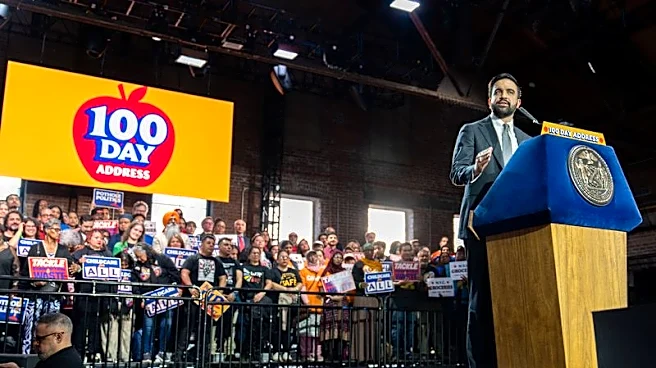
New York City Mayor Zohran Mamdani has issued his first veto, rejecting a City Council bill that proposed establishing anti-protest buffer zones at schools and educational institutions. The bill aimed to create security perimeters to address hate and harassment,
but Mamdani cited constitutional concerns and the broad definition of educational institutions as reasons for the veto. The legislation followed high-profile protests, including those related to the Israel-Gaza conflict, and was intended to ensure safety while maintaining accountability. Civil liberties advocates praised the veto, while supporters of the bill expressed disappointment.
Why It's Important?
The veto highlights the ongoing debate over balancing public safety and free speech rights in the context of protests. The decision underscores the challenges faced by city officials in addressing security concerns without infringing on constitutional rights. The outcome of this legislative process could set a precedent for how cities manage protests near sensitive locations, impacting future policy decisions and civil liberties. The response from various stakeholders, including civil liberties groups and community organizations, reflects the complexity of navigating these issues in a diverse urban environment.
What's Next?
Following the veto, the City Council may consider attempting to override the mayor's decision. This process will involve further discussions and potential revisions to the proposed legislation. The outcome will be closely watched by civil liberties advocates, educational institutions, and community groups, as it could influence future policies on protest management and public safety. The ongoing dialogue between city officials and stakeholders will be crucial in finding a balanced approach that addresses security concerns while respecting constitutional rights.