







What's Happening?
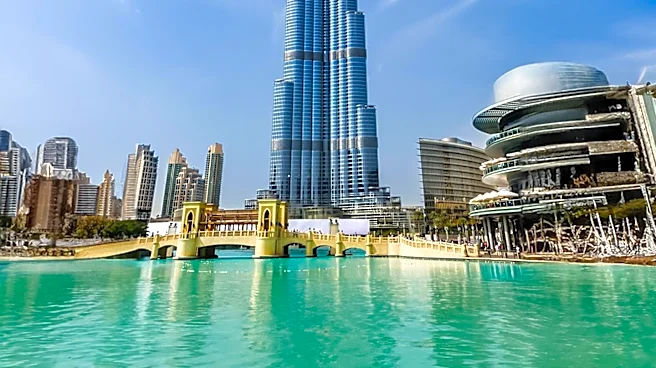
Chicago-born architect Adrian Smith, renowned for designing the Burj Khalifa in Dubai, has publicly credited Chicago's Lake Point Tower as a significant inspiration for his work. Lake Point Tower, completed in 1968, is a distinctive 645-foot glass skyscraper
located at 505 North Lake Shore Drive, making it the only Chicago skyscraper situated east of Lake Shore Drive. At the time of its completion, it held the title of the world's tallest apartment building. Designed by architects George Schipporeit and John Heinrich, who studied under Ludwig Mies van der Rohe, the tower features a unique asymmetrical Y-shaped design with three curved wings radiating from a central triangular concrete core. This innovative form was specifically engineered to effectively shed wind and maximize distinct views from each apartment. The building also pioneered the concept of a 'park in the sky,' offering a two-and-a-half-acre private park three stories above ground, complete with a playground, swimming pool, and waterfalls, along with shops and restaurants on its lower levels.
Why It's Important?
This acknowledgment by Adrian Smith highlights the enduring influence of Chicago's architectural heritage on global design and engineering. Lake Point Tower's innovative design, particularly its curved form and strategic placement, demonstrated advanced solutions for urban living and structural integrity in challenging environments. Its ability to shed wind and offer panoramic views set a precedent for future high-rise developments. The tower's pioneering 'park in the sky' concept also showcased an early integration of green spaces and community amenities within a high-density residential complex, influencing urban planning and residential design. This connection underscores Chicago's role as a crucible for architectural innovation, where ideas developed decades ago continue to inspire and shape iconic structures worldwide, including the world's tallest building. The recognition reinforces the city's legacy as a leader in architectural thought and practice.
What's Next?
The continued recognition of Lake Point Tower's architectural significance may lead to renewed interest in its design principles and historical context. This could inspire contemporary architects and urban planners to revisit and adapt its innovative solutions for modern challenges, particularly in dense urban environments and areas prone to high winds. The tower's legacy could also be further explored in architectural studies and exhibitions, solidifying its place in the pantheon of influential American skyscrapers. For Chicago, this reinforces its status as a living museum of architectural innovation, potentially attracting more architectural tourism and academic interest in its unique urban landscape. The ongoing influence of such designs suggests a continuous dialogue between past innovations and future architectural endeavors.
Beyond the Headlines
The inspiration drawn from Lake Point Tower by Adrian Smith for the Burj Khalifa transcends mere aesthetic appeal; it speaks to a deeper understanding of structural efficiency and environmental integration in skyscraper design. The curved form, initially conceived to mitigate wind forces and optimize views, proved to be a highly adaptable and effective solution that could be scaled to unprecedented heights. This connection highlights the iterative nature of architectural innovation, where successful concepts are refined and reapplied across different contexts and scales. It also underscores the often-overlooked influence of regional architectural achievements on global landmarks, demonstrating how local ingenuity can have far-reaching impacts. The story of Lake Point Tower and its influence on the Burj Khalifa serves as a testament to the timeless principles of good design and the continuous evolution of architectural thought.