







What's Happening?
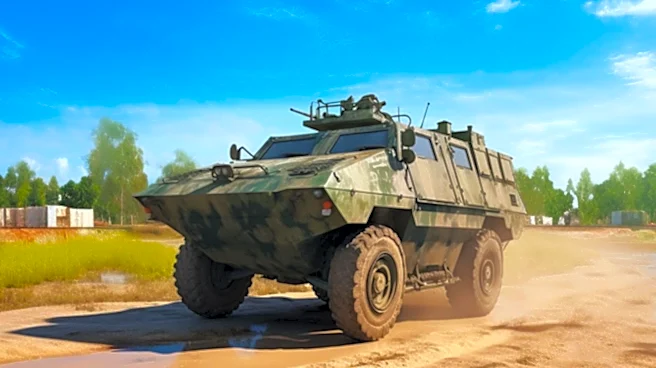
European military forces are increasingly prioritizing mobility and agility in their armored vehicle fleets to enhance battlefield effectiveness. The ongoing conflict in Ukraine has underscored the vulnerability of static military vehicles to modern warfare
tactics, such as the use of drones and precision-guided munitions. As a result, European armies are investing in vehicles that can quickly relocate, reinforcing positions and maneuvering around threats. The Leopard 2A8 tank, equipped with the mtu MB 873 engine, exemplifies this trend by combining improved protection and advanced electronics with high mobility. Additionally, the Puma infantry fighting vehicle utilizes a compact propulsion system to maintain agility despite its weight. These developments are part of a broader effort to modernize military fleets across Europe, ensuring that vehicles can operate effectively even when traditional support networks are disrupted.
Why It's Important?
The emphasis on mobility and agility in military vehicles is crucial for maintaining operational readiness and effectiveness in modern combat scenarios. As European countries bolster their defenses against potential threats, the ability to quickly deploy and maneuver armored vehicles is vital. This focus on mobility addresses logistical challenges posed by Europe's infrastructure, such as road and rail networks, which can impede the rapid movement of heavy military equipment. By investing in vehicles with proven propulsion systems and established logistics networks, European armed forces can reduce technical and logistical risks while enhancing interoperability among NATO allies. This strategic shift not only improves battlefield effectiveness but also strengthens deterrence capabilities, ensuring that European forces can respond swiftly to emerging threats.
What's Next?
Looking ahead, European military forces are planning further advancements in their armored vehicle fleets. Germany and France are collaborating on the Main Ground Combat System (MGCS), a next-generation tank expected to be operational by the 2040s. In the interim, Germany has requested additional tanks, including the Leopard 3, to bridge the gap until the MGCS is ready. These future combat vehicle programs will demand even greater mobility and flexibility, necessitating lighter and more agile designs. As these initiatives progress, European armies will continue to refine their strategies to ensure that their armored vehicles can meet the demands of modern warfare, balancing protection, mobility, and operational readiness.