



What's Happening?
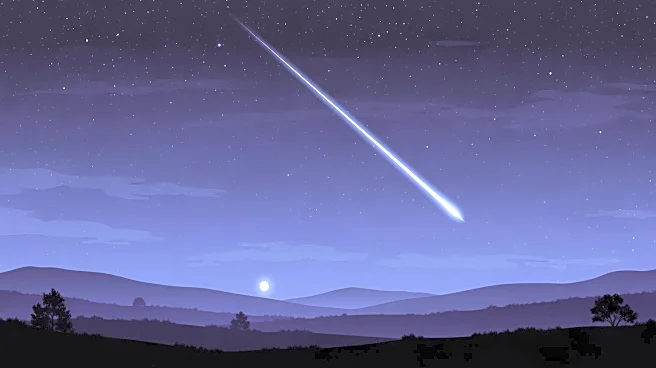
The Geminid meteor shower, one of the most anticipated celestial events of 2025, is set to peak during the night of December 13 into the morning of December 14. This annual meteor shower is renowned for its reliability and is expected to produce up to 150
meteors per hour under optimal dark sky conditions. The Geminids are known for their slower, more graceful meteors compared to other showers, entering the Earth's atmosphere at 22 miles per second. The shower's radiant point is located near the star Castor in the constellation Gemini, which will be high in the sky by midnight, offering excellent viewing opportunities. The moon will be a waning crescent, rising only in the predawn hours, thus minimizing light interference during the peak viewing times.
Why It's Important?
The Geminid meteor shower is significant not only for its visual spectacle but also for its scientific interest. Unlike most meteor showers, which originate from comets, the Geminids are associated with the asteroid 3200 Phaethon. This makes the shower a subject of study for understanding the composition and behavior of asteroid debris. For the public, the Geminids offer a chance to engage with astronomy, fostering interest in space science. The event also provides an opportunity for amateur astronomers and photographers to capture stunning images of meteors streaking across the sky, contributing to public science outreach and education.
What's Next?
As the peak of the Geminid meteor shower approaches, skywatchers are advised to prepare for cold weather viewing conditions. Observers should find a location with minimal light pollution and a clear view of the sky. The best viewing times will be from late evening on December 13 through the early morning hours of December 14. Following the peak, meteor activity will gradually decrease, but observers may still catch a few meteors in the nights following the peak. The event is expected to draw significant public interest, with astronomy clubs and observatories likely organizing viewing events.
Beyond the Headlines
The Geminid meteor shower highlights the ongoing interaction between Earth and the debris from celestial bodies like asteroids. This interaction provides valuable data for scientists studying the dynamics of our solar system. Additionally, the shower underscores the importance of preserving dark skies, as light pollution can significantly diminish the visibility of such natural phenomena. Efforts to reduce light pollution not only enhance the viewing experience for events like the Geminids but also benefit ecological systems and human health.
![Daily Slop: 12 Feb 26 – New Commanders OC David Blough: “How do we get Terry [McLaurin] 10 targets a game?“](https://glance-mob.glance-cdn.com/public/cardpress/binge-magazine-card-generation/spaces/US/en/sb-nation/images/ppid_2cf3d240-image-177091266842313096.webp)