



What's Happening?
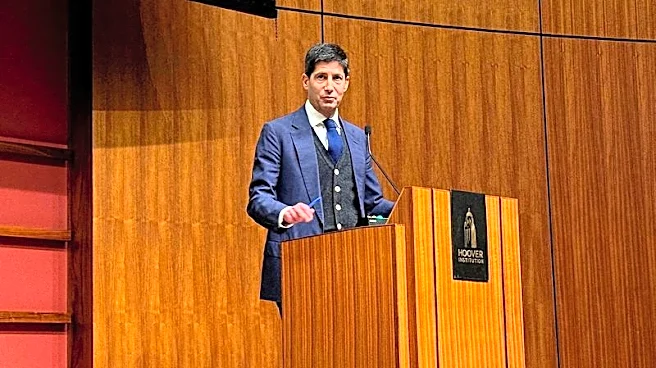
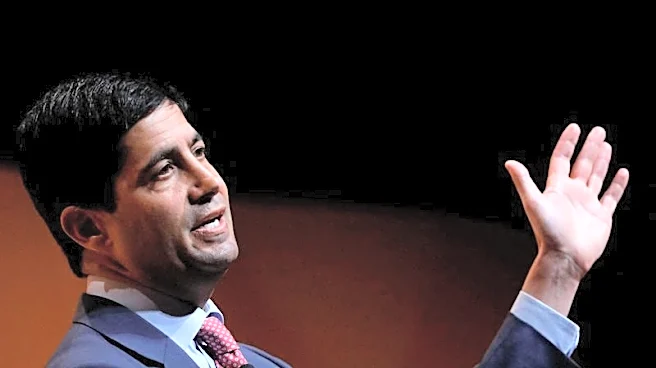
Kevin Warsh, nominated by President Trump to be the next chair of the Federal Reserve, faced a challenging Senate confirmation hearing. Despite tough questioning from both Democrats and Republicans, Warsh's plan for a 'regime change' at the Federal Reserve remained
largely intact. His proposal includes redefining inflation and altering the Fed's operational approach. Warsh, who has been a critic of the Fed's current policies, aims to lower interest rates and overhaul the institution's practices. During the hearing, Warsh addressed concerns about his relationship with President Trump, asserting that he had not been instructed to follow any specific interest rate path. The hearing highlighted Warsh's controversial stance on the Fed's current policies and his intent to implement significant changes if confirmed.
Why It's Important?
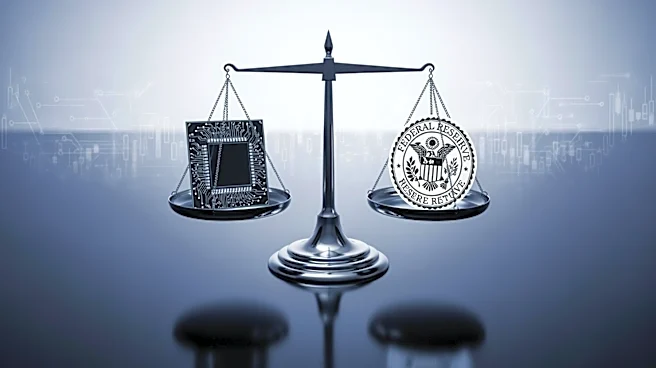
The confirmation of Kevin Warsh as the Federal Reserve chair could lead to significant shifts in U.S. monetary policy. Warsh's approach, which includes lowering interest rates and redefining inflation, could impact the economy by influencing mortgage and credit card rates. His stance challenges the status quo, potentially affecting the Fed's credibility and its relationship with financial markets. Warsh's confirmation could also signal a shift towards more aggressive monetary policies, aligning with President Trump's previous calls for lower interest rates. This development is crucial for stakeholders in the financial sector, as it may lead to changes in market dynamics and economic forecasts.
What's Next?
If confirmed, Warsh is expected to face resistance from within the Federal Reserve, particularly from the Federal Open Market Committee, which he would need to convince to implement his proposed changes. The confirmation process will continue, with further scrutiny likely from both political and financial circles. Warsh's potential leadership could lead to debates over the Fed's independence and its role in managing the economy. Observers will be watching closely to see how Warsh navigates these challenges and whether his proposed 'regime change' will gain traction within the Fed.