






What's Happening?
The Philippines is in advanced discussions with India to acquire approximately five additional BrahMos supersonic cruise missile systems, comprising nearly 60 missiles. This potential deal, valued between $700 million and $800 million, would significantly
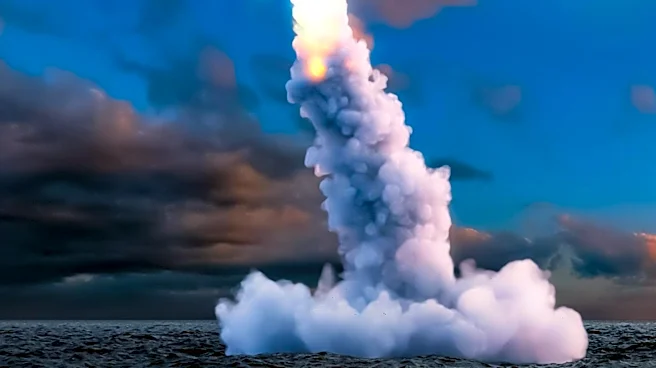
expand upon a previous $375 million agreement signed in 2022 for BrahMos missiles for naval operations, deliveries of which are nearing completion. Philippine Defence Ministry spokesperson Arsenio Andolong confirmed President Ferdinand Marcos Jr.'s interest in acquiring more missiles, while Defence Secretary Gilberto Teodoro discussed Manila's requirements with Indian officials at the Delhi Defence Dialogue. The proposed purchase aims to strengthen the Philippines' military capabilities and coastal defense, particularly in response to escalating tensions with China over territorial claims in the South China Sea. The BrahMos missile, jointly developed by India and Russia, is one of the world's fastest cruise missile systems, capable of launch from land, naval vessels, and aircraft.
Why It's Important?
This potential acquisition is crucial for the Philippines as it seeks to modernize its military and enhance its deterrence capabilities amidst increasing confrontations with China in the South China Sea. The BrahMos missile system would provide a significant boost to the Philippines' coastal defense, offering a credible deterrent against potential aggression. For India, this deal represents a major expansion of its defense export footprint, reinforcing its position as a reliable defense partner in the Indo-Pacific region. India's defense exports have seen substantial growth, reaching $4.11 billion in the last financial year. The deal also underscores a broader trend of nations in the region seeking to bolster their defense capabilities independently or through partnerships, contributing to a shifting geopolitical landscape in Southeast Asia. The transfer of such advanced weaponry could alter the regional military balance and influence strategic calculations among claimant states in the South China Sea.
What's Next?
Final-stage negotiations between India and the Philippines are underway, indicating that an agreement could be reached in the near future. Should the deal materialize, it would involve the customization of the BrahMos system to meet the Philippines' specific operational requirements and geographical environment, as outlined by Defence Secretary Gilberto Teodoro. Following the agreement, India would proceed with the production and delivery of the additional missile systems, building on the experience gained from the initial contract. This transaction could also pave the way for further defense cooperation between the two countries. Other nations in the region, such as Indonesia and Vietnam, have already secured or are discussing similar missile deals with India, suggesting a growing market for Indian defense technology. The implementation of this deal will likely be closely watched by regional powers, particularly China, as it directly impacts the military balance in a contested maritime area.
Beyond the Headlines
The potential $800 million BrahMos missile deal extends beyond a simple arms transaction; it signifies a deepening strategic alignment between India and the Philippines. This partnership reflects a broader regional effort to counter China's growing influence and assertiveness in the South China Sea. By acquiring advanced defense systems from India, the Philippines is diversifying its defense procurement sources and reducing reliance on traditional allies, thereby enhancing its strategic autonomy. The deal also highlights India's emergence as a significant player in the global defense market, offering advanced military technology that was once primarily sourced from Western or Russian suppliers. This shift could lead to a more multipolar defense supply chain in Asia, fostering greater strategic independence among nations. Furthermore, the deployment of such potent defensive weapons could contribute to a more stable deterrence posture in the South China Sea, potentially reducing the likelihood of direct conflict by raising the costs of aggression.