



What's Happening?
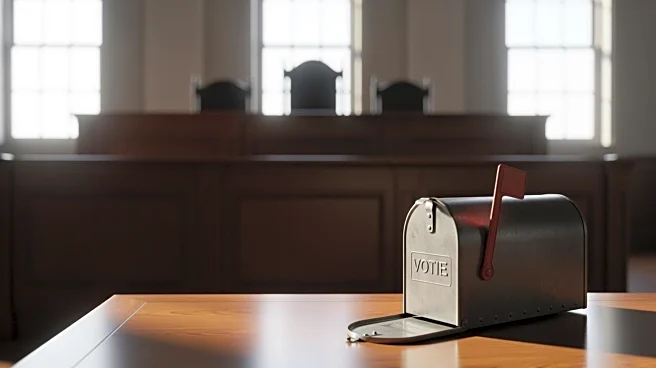
The U.S. Supreme Court is set to review a Mississippi law that allows mail ballots to be counted if they arrive after Election Day, a practice currently under scrutiny. This case has sparked a national debate on the integrity and timing of mail-in voting.
The Republican National Committee and the Libertarian Party of Mississippi have challenged the law, arguing that it violates federal statutes that envision a single day for casting ballots. The case has prompted several states, including Ohio, Kansas, North Dakota, and Utah, to eliminate grace periods for mail ballots, while Minnesota has shortened its deadline. The outcome of this case could significantly impact the 14 states that currently allow grace periods for mail ballots, as well as the 29 states that permit late arrival of military and overseas ballots.
Why It's Important?
The Supreme Court's decision could reshape the landscape of mail-in voting across the United States. If the court rules against Mississippi, it may force states to adjust their voting procedures rapidly, potentially leading to voter confusion and disenfranchisement. The case highlights the ongoing tension between state and federal control over election laws, with significant implications for voter access and election integrity. The decision could also influence public confidence in the electoral process, particularly in states that have relied on grace periods to accommodate mail-in voters. This case underscores the broader national debate on voting rights and election security, with potential ramifications for future elections.
What's Next?
If the Supreme Court strikes down the grace periods, states will need to quickly adapt their election procedures ahead of upcoming elections. This could involve legislative changes or emergency measures to ensure compliance with the new legal framework. Election officials may face logistical challenges in implementing these changes, particularly in states with large numbers of mail-in voters. The decision could also prompt further legal challenges and debates over the balance of power between state and federal election laws. Stakeholders, including political parties, voting rights groups, and state officials, will likely continue to advocate for their positions on mail-in voting and election integrity.