






What's Happening?
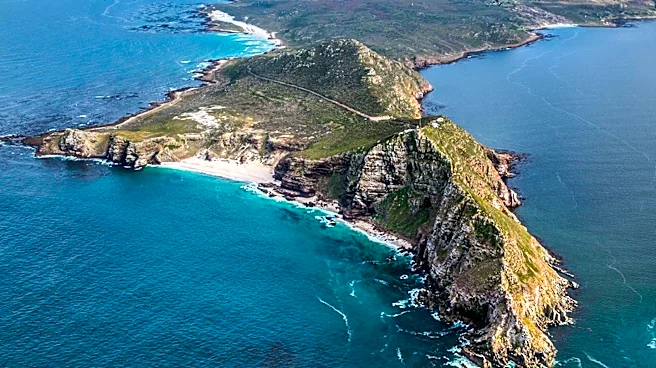
Cape Point, located at the southern end of the Cape Peninsula within Table Mountain National Park, is a significant attraction known for its rugged cliffs and expansive ocean views. Visitors can ride the Flying Dutchman funicular to the old lighthouse,
which was originally built in 1859. This lighthouse, positioned at the summit, was often obscured by clouds, leading to the construction of a new, more powerful lighthouse lower down at Dias Point in 1919. The area offers cliff-edge paths with sweeping vistas of the Atlantic and False Bay. The Cape of Good Hope, Africa’s most southwesterly point, is a short distance away and is a popular photo stop. While many believe the Atlantic and Indian Oceans meet here, their official boundary is actually at Cape Agulhas, about 150 km to the east-southeast.
Why It's Important?
Cape Point's status as a major tourist destination contributes significantly to the regional economy through visitor spending on tours, dining, and souvenirs. Its historical lighthouses and dramatic landscapes attract both local and international tourists, supporting the tourism industry and related services. The area's inclusion within Table Mountain National Park also highlights its ecological importance, emphasizing conservation efforts for its unique flora and fauna, including ostrich, eland, bontebok, and chacma baboons. The management of wildlife and visitor etiquette, such as not feeding animals, is crucial for maintaining the ecological balance and ensuring a safe experience for both humans and wildlife. The site's historical significance, marked by shipwrecks and maritime history, adds a cultural layer to its natural appeal.
What's Next?
Future developments at Cape Point will likely focus on enhancing visitor experience while maintaining environmental preservation. This could include improvements to walking trails and viewing platforms, as well as educational initiatives to inform visitors about the area's history, ecology, and the importance of responsible tourism. Efforts to manage wildlife interactions, particularly with baboons, will continue to be a priority to ensure safety and protect the animals. Marketing strategies will probably emphasize the unique blend of natural beauty, historical landmarks, and wildlife viewing opportunities to attract a diverse range of tourists, further solidifying Cape Point's reputation as a must-visit destination within South Africa.
Beyond the Headlines
The enduring myth of the Atlantic and Indian Oceans meeting at Cape Point, despite the official boundary being elsewhere, underscores the power of popular perception and historical narratives in shaping tourist attractions. This phenomenon highlights how certain locations gain iconic status not just from factual geography but also from romanticized interpretations. The presence of two lighthouses, one old and one new, tells a story of human adaptation and technological advancement in response to environmental challenges. Furthermore, the strict guidelines against feeding wildlife, particularly baboons, reflect a broader ethical consideration in ecotourism, emphasizing the need to minimize human impact on natural ecosystems and promote responsible interaction with wild animals.