





What's Happening?
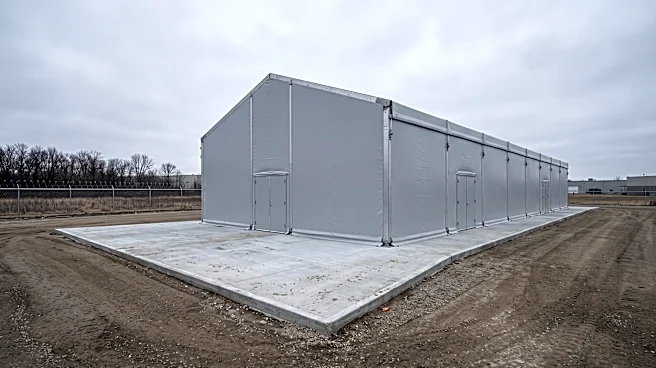
The Department of Homeland Security (DHS) is allocating $7.2 million to Akima Infrastructure Protection to construct a 'soft-sided tent facility' for detained women near Buffalo, New York. This development comes after New York State implemented a law
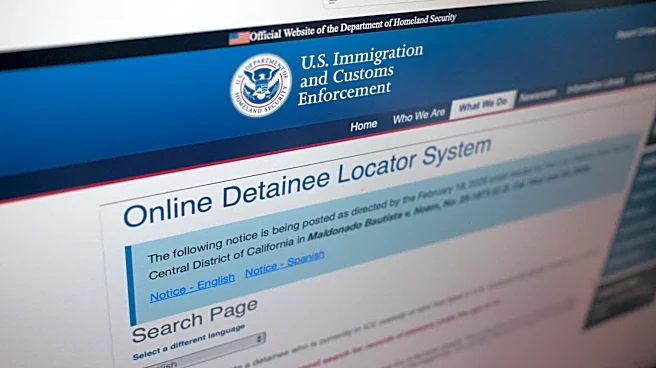
prohibiting county jails from holding individuals for immigration authorities. The funding was added to an existing $9.4 million order that U.S. Immigration and Customs Enforcement (ICE), a component of DHS, signed in July for routine detention and transportation services at the Buffalo Service Processing Center in Batavia. Akima Infrastructure Protection is also involved in migrant detention operations at Guantanamo Bay, Cuba. The federal contracting record, reviewed by Project Salt Box, specifies the money is for 'the establishment of a soft-sided tent facility for housing female aliens.' Details regarding the capacity of the tent camp, its exact location on the property, or the construction timeline have not been disclosed.
Why It's Important?
This move by DHS signifies a direct response to state-level policies impacting federal immigration enforcement, highlighting the ongoing tension between state and federal jurisdictions on immigration matters. New York's 'Local Cops, Local Crimes Act,' which took effect on August 25, has compelled ICE to seek alternative detention solutions, leading to the establishment of new, potentially temporary, facilities. The allocation of millions of dollars for a tent facility underscores the federal government's commitment to maintaining detention capacity despite state-level restrictions. This situation could set a precedent for how federal immigration authorities adapt to similar legislative changes in other states. The use of 'soft-sided' facilities, which are tent-style detention camps, has been a growing trend for ICE, with the largest being Camp East Montana in Texas. The shift to such facilities raises questions about the long-term sustainability, cost-effectiveness, and conditions of detention for migrants, particularly women, in potentially less permanent structures.
What's Next?
Construction of the tent facility near Buffalo, New York, is expected to commence, though specific timelines are not yet public. The establishment of this facility will likely draw attention from immigration advocates, human rights organizations, and local communities, who may scrutinize the conditions and operational standards of the new camp. The decision to use a contractor like Akima, which also manages detention at Guantanamo Bay, could invite further examination of the company's practices and the broader privatization of immigration detention services. This situation may also influence other states considering similar legislation to limit cooperation with federal immigration enforcement, as they observe the federal government's adaptive strategies. The long-term implications for immigration detention policy in the U.S., particularly regarding the balance of power between state and federal authorities and the reliance on temporary or contractor-operated facilities, will continue to unfold.
Beyond the Headlines
The funding for a new tent facility in New York reflects a broader national trend where federal immigration enforcement adapts to a patchwork of state and local laws. This dynamic creates a complex and often inconsistent landscape for immigration policy across the U.S. The reliance on 'soft-sided' facilities, while offering flexibility, also raises ethical and practical concerns about the quality of life and access to services for detainees, especially vulnerable populations like women. The shift away from traditional county jails to these temporary structures could lead to less oversight and transparency, potentially impacting the legal and human rights of those detained. Furthermore, the significant financial investment in such facilities, particularly after reports of wasted funds in similar projects, highlights the ongoing challenge of efficient and humane immigration management. This situation underscores the need for a comprehensive and consistent national immigration strategy that addresses both enforcement needs and humanitarian considerations, rather than a reactive approach driven by state-level legislative changes.