





What's Happening?
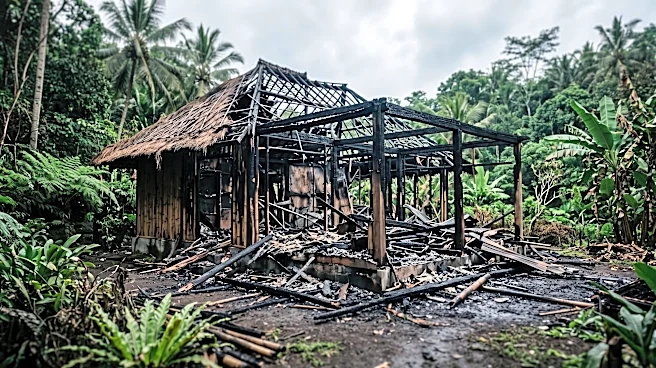
A tourist in Bali, Gaorap Rana, 45, from Nepal, inadvertently caused a massive fire that destroyed a luxury rental villa valued at approximately $130,000. The incident occurred in the village of Tibubening, North Kuta district, after Rana spotted a spider
in the bathroom. In an attempt to remove the spider, he set a piece of paper on fire and threw it towards the insect. The burning paper was then carried by the wind through an open window onto the villa's dry thatched roof. The roof quickly ignited, and strong winds combined with hot weather rapidly spread the blaze throughout the building. Firefighters responded swiftly, preventing the fire from extending to neighboring homes, but the villa and its contents were completely destroyed. Rana managed to escape the inferno unharmed.
Why It's Important?
This incident highlights the significant risks associated with fire hazards, particularly in regions with traditional building materials like thatched roofs and dry climates. For the tourism industry in popular destinations like Bali, such events can lead to increased insurance premiums for property owners and potentially stricter regulations for rental accommodations, impacting both tourists and local businesses. Property owners face substantial financial losses and the complexities of legal disputes, as Rana must now resolve issues with the owners of the burned property. The event also serves as a cautionary tale for tourists regarding personal responsibility and the potential consequences of seemingly minor actions in unfamiliar environments, underscoring the need for awareness of local conditions and safety protocols.
What's Next?
Gaorap Rana is expected to face legal proceedings to resolve issues with the owners of the destroyed villa. The exact nature of these legal ramifications, such as potential charges or civil liabilities, is not specified in the provided information. Local authorities in Bali may review fire safety regulations for rental properties, especially those with traditional construction materials, to prevent similar incidents. This could lead to increased inspections, mandatory fire safety equipment, or educational campaigns for both residents and tourists on fire prevention. The incident may also prompt insurance companies to reassess coverage policies and premiums for properties in high-risk areas, potentially affecting the cost of tourism and property ownership in Bali.
Beyond the Headlines
The incident underscores a broader issue of cultural and environmental awareness for tourists visiting foreign countries. Traditional building methods, while aesthetically appealing, often carry inherent risks that modern construction might mitigate. The use of thatched roofs, common in many tropical destinations, becomes a significant fire hazard in dry conditions, exacerbated by human error. This event could spark discussions on sustainable tourism practices that balance cultural preservation with safety standards. Furthermore, it highlights the legal complexities that can arise from accidental damage caused by tourists, potentially influencing international travel insurance policies and the legal frameworks governing tourist conduct and liability in popular destinations. The story also serves as a stark reminder of how a small, impulsive action can lead to devastating and costly consequences.