





What's Happening?
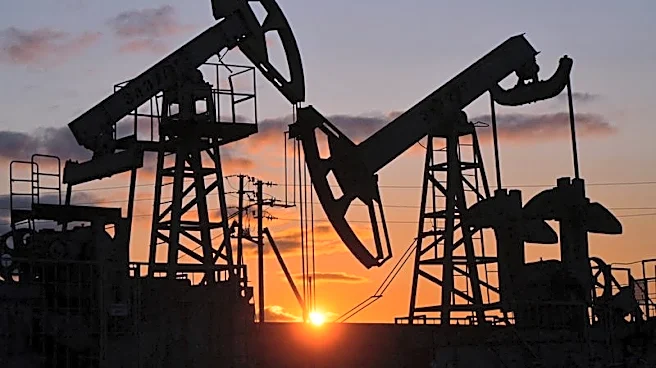
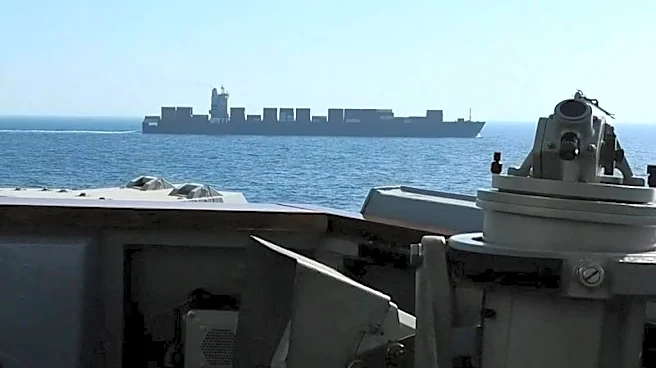
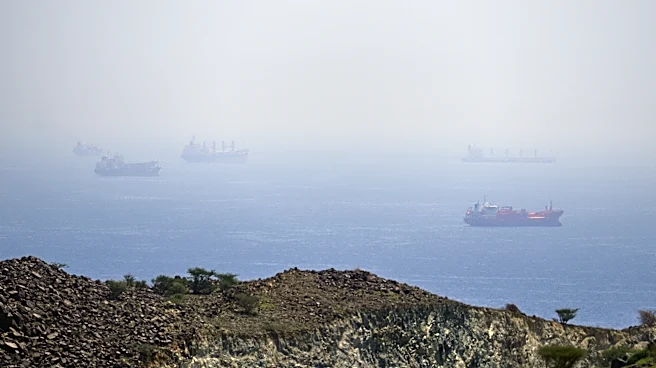
The U.S. seizure of an Iranian cargo ship near the Strait of Hormuz has led to a significant rise in oil prices and a drop in European stock markets. Brent crude oil prices increased by 5% to approximately $95 a barrel, while major European indices like
the FTSE 100, Cac 40, and Dax experienced declines. President Trump announced the seizure on social media, stating that the U.S. has full custody of the ship. This development has raised concerns about the potential failure of the ceasefire between the U.S. and Iran, which was intended to facilitate peace talks in Islamabad. The ongoing conflict has severely impacted global energy markets, with fears of jet fuel shortages affecting airline stocks and potential disruptions in fertilizer supplies threatening global food security.
Why It's Important?
The seizure of the Iranian vessel and the subsequent rise in oil prices underscore the fragility of the global energy market, particularly given the strategic importance of the Strait of Hormuz, through which a significant portion of the world's oil and gas is transported. The incident has heightened fears of prolonged energy shocks, which could lead to increased fuel costs for consumers and further strain on industries reliant on stable energy supplies. The geopolitical tensions also pose risks to international trade and economic stability, with potential ripple effects on food security due to disruptions in fertilizer shipments. The situation highlights the interconnectedness of global markets and the potential for regional conflicts to have widespread economic consequences.
What's Next?
The ceasefire between the U.S. and Iran is at risk of collapsing, which could lead to further escalation of hostilities and additional disruptions in the Strait of Hormuz. Negotiations in Islamabad are uncertain, with Iran expressing reluctance to participate due to unresolved disagreements. The international community, including major stakeholders in the energy sector, will be closely monitoring developments, as any further conflict could exacerbate the current energy crisis. Diplomatic efforts may be intensified to prevent further escalation and to seek a resolution that stabilizes the region and ensures the security of global energy supplies.