
What's Happening?
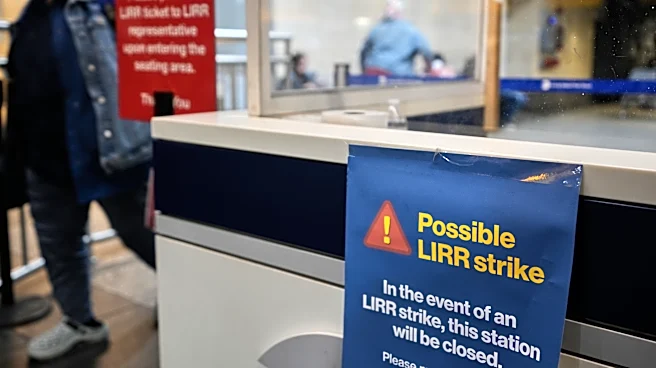
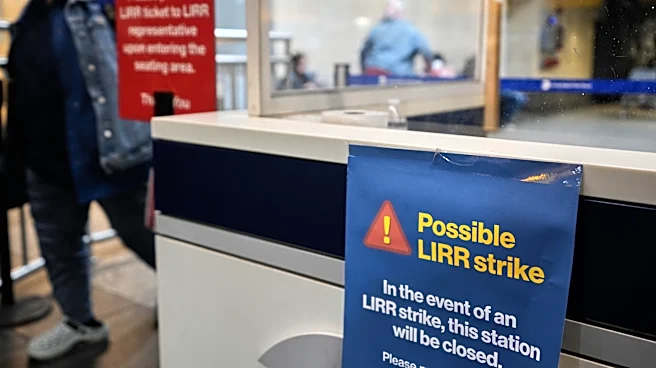
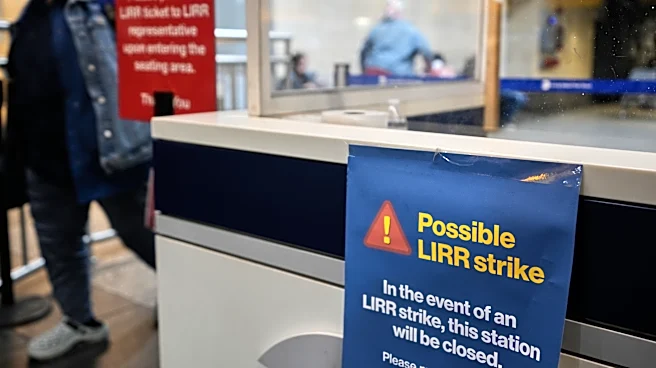
The Long Island Rail Road (LIRR), North America's largest commuter rail system, has been shut down due to a strike by unionized workers in the New York City area. The strike began early Saturday morning
after five unions, representing about half of the LIRR workforce, walked off the job following stalled contract negotiations. Despite intervention attempts by President Trump's administration, no new negotiations have been scheduled. The strike affects approximately 250,000 daily commuters who rely on the LIRR to travel between Long Island suburbs and New York City. The Metropolitan Transportation Authority (MTA) has offered limited shuttle bus services to subway stations, but these are insufficient to accommodate the usual commuter volume. The strike coincides with major sports events in New York City, potentially disrupting plans for fans attending games at venues with dedicated LIRR stops.
Why It's Important?
The strike highlights significant labor disputes over wages and healthcare premiums, with unions demanding raises to match inflation and living costs. The MTA warns that meeting these demands could lead to fare increases, impacting commuters financially. The strike also underscores the challenges of maintaining essential services amid labor disputes, particularly in a region heavily reliant on public transportation. The disruption could exacerbate traffic congestion as more commuters turn to driving. Additionally, the strike poses political implications for New York Governor Kathy Hochul, who faces reelection and must balance resolving the strike with avoiding fare hikes that could alienate voters.
What's Next?
If the strike continues beyond the weekend, commuters will need to find alternative transportation, potentially increasing road congestion. The MTA and unions may face pressure to resume negotiations to prevent prolonged disruption. Governor Hochul's administration might be compelled to intervene more directly to facilitate a resolution, especially given the political stakes. The outcome of the strike could set precedents for future labor negotiations within the MTA and other public transportation systems.