



What's Happening?
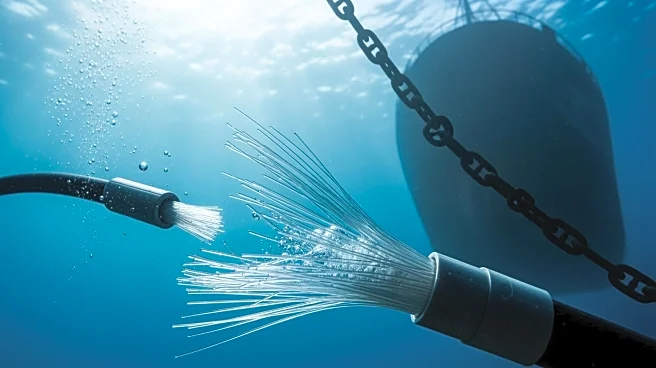
Finnish police have reported that a vessel originating from Russia dragged its anchor along the seabed for several tens of kilometers before damaging an undersea cable linking Helsinki and Tallinn. The incident occurred on December 31, 2025, involving
the Fitburg, a 132-meter-long cargo ship traveling from St. Petersburg to Haifa, Israel. Finnish authorities have detained the ship and launched an investigation into aggravated criminal damage, attempted aggravated criminal damage, and aggravated interference with telecommunications. This event is part of a series of infrastructure damages in the Baltic Sea, raising suspicions of Russian involvement, especially in the context of Russia's full-scale invasion of Ukraine in February 2022.
Why It's Important?
The damage to the undersea cable is significant as it affects critical energy and communications infrastructure between Finland and Estonia. Such incidents are increasingly viewed as part of a 'hybrid war' strategy by Russia against Western countries, aiming to disrupt essential services and create geopolitical instability. The investigation by Finnish authorities highlights the growing concerns over the security of undersea infrastructure in the Baltic Sea, which is vital for regional connectivity and economic activities. The potential involvement of Russia in these acts could further strain diplomatic relations and lead to increased security measures in the region.
What's Next?
Finnish authorities are expected to continue their investigation into the incident, which may involve collaboration with other Baltic Sea nations to enhance security measures for undersea infrastructure. The outcome of the investigation could lead to diplomatic actions or sanctions against Russia if evidence of intentional sabotage is found. Additionally, there may be increased investment in monitoring and protecting critical infrastructure in the region to prevent future incidents. Stakeholders, including political leaders and telecommunications companies, will likely push for more robust international agreements to safeguard undersea cables.
Beyond the Headlines
The incident underscores the vulnerability of undersea infrastructure to geopolitical tensions and the need for international cooperation to address such threats. It raises ethical questions about the use of civilian infrastructure as targets in conflicts and the responsibilities of nations to protect shared resources. The long-term implications could include shifts in regional security policies and increased technological investments to detect and prevent sabotage. This event also highlights the importance of maintaining open lines of communication and collaboration among nations to ensure the stability and security of critical infrastructure.